


15 Vitality and Wellness Insights From Your Smart Ring Data
Fifteen insights about vitality from your smart ring's data reports.
Fifteen insights about vitality from your smart ring's data reports.
%402x.svg)
For decades, we navigated our health in the dark. We relied on annual check-ups—snapshots in time—and vague feelings of being "run down" or "off." Wellness was a guessing game, dictated by generic advice and disconnected from our unique, daily biology. That era is over. The advent of the smart ring has ushered in a new paradigm of personalized, data-driven health, transforming a simple piece of jewelry into a 24/7 personal health observatory.
This continuous stream of physiological data—heart rate, sleep architecture, heart rate variability, temperature, and more—is not just numbers on a screen. It’s a dynamic, living narrative of your body. It tells the story of how you recover from stress, how deeply you rest, how your nervous system balances the demands of life, and how your body whispers its needs long before symptoms shout. But raw data is just the beginning. The true power lies in the insights—the actionable wisdom—that we can extract from it.
This guide is your deep dive into that wisdom. We will move beyond simply tracking metrics to truly understanding what they reveal about your vitality. We will explore fifteen profound insights your smart ring data can provide, teaching you to interpret the signals, connect the dots between different systems, and make informed choices that enhance your energy, resilience, and long-term well-being. This isn't about obsessive monitoring; it's about cultivating a deeper, more responsive relationship with the only body you have, empowering you to build a proactive, lifelong health strategy that evolves with you. Let’s begin translating data into vitality.
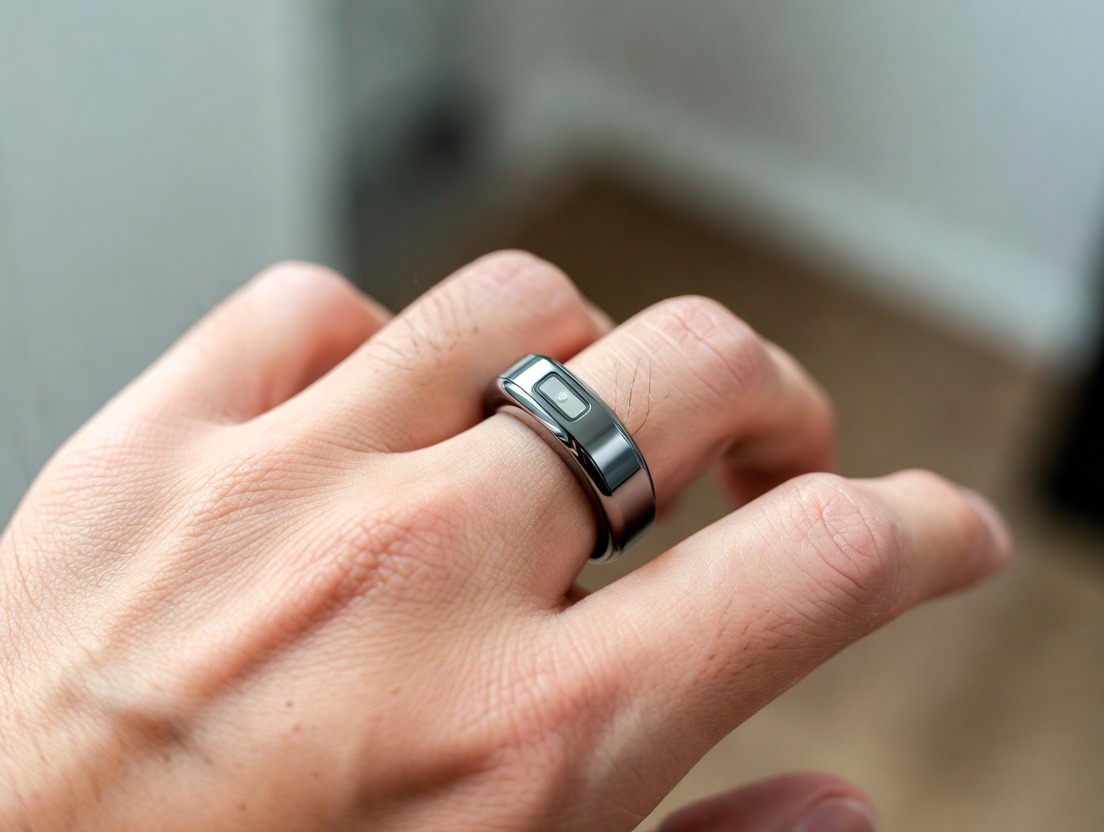
Most people know their resting heart rate (RHR) is important, but few understand what it’s truly signaling. Your smart ring, measuring from the finger’s rich vascular bed, captures your true resting heart rate—often during the deep sleep phases when external influences are minimized. This isn't the number you get from a quick check while scrolling in bed; it’s your cardiovascular system’s baseline performance metric.
A lower RHR typically indicates a stronger, more efficient heart muscle that can pump more blood with fewer beats. But the insight goes deeper. Your RHR is a sensitive barometer of your overall systemic load. It responds to:
The critical insight here is to watch the trend, not the daily fluctuation. A gradual upward creep over weeks might suggest you're chronically overreaching. A sudden, sustained spike is your body raising a red flag. By understanding this, you can learn to respond—perhaps by prioritizing rest, increasing hydration, or managing stress—before a minor imbalance becomes a larger issue. For a comprehensive look at what this and other key metrics mean, our guide on what your smart ring actually measures provides a foundational deep dive.
If resting heart rate is the story of your heart’s strength, Heart Rate Variability (HRV) is the story of its intelligence and your nervous system’s flexibility. HRV measures the subtle, millisecond variations in time between each heartbeat. Contrary to intuition, a higher HRV is generally better—it means your heart is responsive and adaptable, finely tuned by the balanced interplay between your stress (sympathetic) and relaxation (parasympathetic) nervous systems.
Your smart ring’s nightly HRV reading is a goldmine of insight into your physiological and psychological state:
The profound insight from HRV is learning to listen to your body’s readiness signals. Instead of rigidly sticking to a workout schedule, you can use a low HRV as a cue to opt for gentle movement or extra sleep. This dynamic, responsive approach to training and life is the cornerstone of sustainable wellness. It allows you to maximize your healthspan by working with your body’s rhythms, not against them. For those new to this complex metric, we break it down in our article on understanding HRV numbers simply.
Counting hours of sleep is a crude measure. Your smart ring’s advanced sensors decode your sleep architecture—the cyclical journey through light, deep, and REM (Rapid Eye Movement) sleep stages. Each stage serves a distinct, vital purpose, and their proportion and quality are where the real insights lie.
The insight from sleep architecture is personalized optimization. You might discover:
By analyzing your stages, you move from asking "Did I sleep enough?" to "Did I sleep well?" This allows for targeted adjustments. If your deep sleep is consistently low, focus on recovery practices. If REM is lacking, prioritize stress management and a consistent wind-down routine. Understanding the details behind your sleep quality scores and stages is the first step to mastering this critical pillar of health.
The single most important concept in biometric tracking is establishing and understanding your personal baseline. Your healthy normal is unique to you. Comparing your HRV of 45 to someone else’s 70 is meaningless. The true insight comes from observing deviations from your own norm.
Your smart ring builds this baseline over weeks of continuous wear, accounting for your lifestyle, age, and genetics. This personalized frame of reference transforms data from confusing numbers into clear signals.
The insight is to stop chasing generic ideals and start understanding your body’s unique language. A "good" score is one that aligns with your healthy baseline. This self-referenced approach is the essence of precision wellness.
Many smart rings synthesize key metrics—like HRV, RHR, sleep quality, and temperature—into a single "Readiness" or "Recovery" score. This is not a gimmick; it’s a powerful, algorithmic insight designed to answer one question: "What is my body capable of handling today?"
Think of it as your body’s daily briefing. A high readiness score suggests your systems are primed. It’s a green light to tackle that intense workout, important presentation, or big social event. A low score is not a failure; it’s valuable information. It’s a recommendation to prioritize recovery through lighter activity, extra sleep, hydration, and stress management.
The profound behavioral insight here is learning to let objective data guide subjective feeling. We often override our body's signals with discipline or "pushing through." The readiness score provides an external, impartial check. Honoring a low score by choosing a walk instead of a sprint interval session isn't weakness; it’s intelligent, sustainable training that prevents burnout and injury. It teaches the crucial balance between discipline and flexibility in any lifelong wellness journey. To understand the complex calculations behind this simple number, explore our explanation of the metrics behind readiness scores.
Your body runs on a master internal clock—your circadian rhythm—that orchestrates nearly every physiological process, from hormone release to metabolism to sleep-wake cycles. Your smart ring data provides a stunningly clear window into how well your lifestyle is synchronized with this innate rhythm.
Key indicators of circadian health include:
The insight from this data is the power of rhythm itself. You might see that:
By aligning your habits—light, food, activity, and sleep—with your circadian biology, you enhance energy, improve metabolic health, and deepen sleep. It’s about working with your body’s natural timing for effortless efficiency. Our blog delves deeper into the specific circadian rhythm indicators visible in your data.
Stress is not the enemy; a lack of recovery is. Your smart ring data vividly maps the daily dance between stress (sympathetic activation) and recovery (parasympathetic restoration). This isn't just about feeling stressed; it's about measuring your body's objective physiological response and its ability to return to balance.
Look for these signatures:
The insight is moving from a binary "stressed/not stressed" mindset to a nuanced understanding of your stress-recovery cycle. The goal isn't to eliminate stress but to ensure your recovery periods are adequate and effective. This data empowers you to strategically insert "recovery micro-doses"—like brief breathing exercises after a meeting—to aid nervous system reset, preventing stress from accumulating into chronic strain. Learn more about how your ring reveals stress levels through analysis of these patterns.

While less dynamic than heart rate, skin and body temperature data from your smart ring is a slow-moving, highly insightful metric. It reflects core physiological processes like metabolism, circulation, and hormonal fluctuations.
Key insights from temperature tracking include:
The insight here is in the subtle, long-term trend. Daily variations are normal, but a multi-day shift in your baseline temperature is a significant signal from your body’s internal environment. It encourages you to ask "why?" and connect it to other data points—is the rise in temperature coupled with a higher RHR and lower HRV, suggesting immune activation? This holistic view is key to predicting immune system function and other systemic changes.
The modern wellness world is full of trends: cold plunges, caffeine timing, fasting protocols, new workout regimens. Does it work? For you? Your smart ring turns personal experimentation into an evidence-based practice.
Instead of relying on how you "feel," you can design n=1 experiments:
This process validates your wellness habits with hard data. You might find that a recommended practice does nothing for your scores, while a small, personalized tweak yields dramatic improvements. It democratizes biohacking, making you the expert on your own body. This empirical approach is fundamental to creating a truly personalized and effective 50-year wellness blueprint.
Respiratory rate (RR)—the number of breaths you take per minute—is a clinical vital sign often overlooked in consumer health tracking. Your smart ring, however, can accurately measure this throughout the night. While it’s a stable metric for most, changes are highly meaningful.
A normal adult RR at rest is 12-20 breaths per minute. Insights from tracking it include:
The insight is in recognizing this metric as a fundamental indicator of metabolic and respiratory efficiency. A sudden, sustained increase is a clear flag for further investigation. Monitoring it alongside blood oxygen saturation (SpO2) provides an even clearer picture of your respiratory health during sleep. Understanding the connection between respiration rate and overall health adds another layer to your self-knowledge.
Fitness trackers have long celebrated activity. The smarter insight from a wellness ring is the relationship between activity and recovery. This is the symmetry that drives sustainable progress and prevents the all-too-common cycle of overtraining, burnout, and injury.
Your data allows you to see this balance—or imbalance—clearly:
The insight is that more is not always better. The optimal dose of stress—whether physical, mental, or emotional—is the one you can recover from. Your ring data helps you find your personal "golden ratio," ensuring you stimulate growth without overwhelming your system. This principle is absolutely critical to prevent frailty and maintain resilience as we age, a key component of any strategy to prevent frailty in old age.
Blood oxygen saturation (SpO2) measures the percentage of oxygen-carrying hemoglobin in your blood. While daytime SpO2 is typically stable and high (95-100% at sea level), its behavior during sleep is where your smart ring uncovers critical insights. Nighttime SpO2 monitoring provides a continuous, non-invasive look at your respiratory system's performance while you are most vulnerable.
The key insight isn't a single number, but the pattern and frequency of dips or desaturations. These are moments when SpO2 falls, often briefly, below your normal baseline.
The actionable insight here is moving from unawareness to awareness. While a smart ring is not a medical diagnostic device, persistent abnormal SpO2 patterns are a powerful prompt to seek a professional sleep study. Addressing sleep apnea can be transformative, leading to better sleep, more daytime energy, lower blood pressure, and reduced long-term health risks. Understanding the wellness connection behind your blood oxygen data is a crucial step in holistic health monitoring.
For the fitness enthusiast, the smart ring shifts the focus from external output (pace, weight, reps) to internal response. This is tracked through metrics like training load, workout strain, or heart rate-based exertion scores. It quantifies the physiological stress of your exercise, allowing you to balance it precisely with recovery.
The insight lies in the calibration of effort:
This data-driven approach prevents the common pitfalls of "junk mileage" in training—doing workouts that are too hard to be easy but too easy to drive adaptation. It teaches you to execute hard days with intensity and honor easy days with discipline, creating the perfect stimulus for growth. For a detailed breakdown, our article on understanding workout load and training stress explains how these metrics are calculated and used.
Metabolic health—how efficiently your body converts food into energy and manages blood sugar—is foundational to vitality, weight management, and disease prevention. While a smart ring doesn't measure glucose directly, it provides a rich, indirect "metabolic fingerprint" through correlated physiological signals.
Key insights into metabolism can be gleaned from:
The insight is connecting daily choices to systemic metabolic tone. You might experiment and see that a day of high-sugar foods leads to a more restless night and a higher morning RHR. Conversely, a day of balanced nutrition and activity promotes deeper sleep and better recovery scores. This feedback loop encourages habits that support metabolic stability, a core pillar of longevity. Discover more about how your data can indicate your metabolic health status.
Fatigue isn't just about last night's sleep. It's cumulative. Your smart ring is exceptional at revealing this often-invisible load of sleep debt and systemic fatigue that builds over days or weeks of insufficient recovery.
This is visible through several converging data points:
The critical insight is recognizing that one bad night is recoverable, but a pattern requires intervention. This data helps you identify a fatigue spiral early, before it manifests as exhaustion, illness, or injury. It makes the abstract concept of "burnout" quantitatively visible, allowing you to take proactive measures like scheduling a true deload week, prioritizing sleep, or dialing back social commitments. Learning to spot and respect cumulative fatigue and sleep debt is essential for sustainable performance in all areas of life.

Perhaps the most profound insight from continuous biometrics is the tangible, physical manifestation of our mental and emotional state. The brain and body are one system; therefore, psychological stress, anxiety, relaxation, and joy all leave a physiological signature.
Your smart ring data provides objective evidence of this mind-body connection:
The insight here is empowerment through awareness. By observing how your emotions physically register, you gain the power to intervene. If you see a stress spike, you can employ a breathing technique and watch your heart rate drop in real-time (or in the data later). This creates a powerful biofeedback loop, reinforcing healthy coping mechanisms. It underscores that caring for your mental health is inseparable from caring for your physical health, a holistic view supported by data that can predict mental health changes.
Hormones are the body's master regulators, influencing energy, mood, metabolism, sleep, and recovery. While smart rings don't measure hormones directly, they track the physiological outcomes hormone fluctuations produce, offering powerful insights, particularly for women.
The insight is moving from mystery to clarity regarding your hormonal landscape. It replaces guessing with data, fostering a more compassionate and strategic approach to navigating natural hormonal phases and identifying when things may be going awry. Understanding the connection between skin temperature and hormonal changes is a prime example of this powerful correlation.
At its core, much of your smart ring data is a direct or indirect report on your cardiovascular system. By synthesizing these signals over months and years, you gain a dynamic picture of your heart's efficiency and resilience, a key predictor of longevity and vitality.
Long-term tracking reveals insights into cardiovascular health:
This longitudinal view transforms the ring from a daily tool into a guardian of your long-term health. It allows you to see the compounding benefits of healthy habits and the slow costs of unhealthy ones, providing motivation and a clear feedback loop for a family health legacy built on data-informed choices. For a focused analysis, explore how specific metrics reveal cardiovascular health.
Your Autonomic Nervous System (ANS) is the autopilot controlling involuntary functions—heartbeat, digestion, breathing. Its two branches, the sympathetic (accelerator) and parasympathetic (brake), are in a constant, dynamic dance. Your smart ring is, in essence, a real-time ANS dashboard.
HRV is the premier metric for ANS balance, but it's supported by a chorus of others:
By learning to read your ANS dashboard, you can make choices to influence its state. When you see signs of excessive sympathetic tone, you can consciously engage the parasympathetic branch through diaphragmatic breathing, meditation, or gentle movement. This is biohacking at its most fundamental—directly influencing the system that governs your health, performance, and sense of well-being. Delve deeper into this topic with our article on understanding autonomic nervous system balance.
Aging is inevitable, but its rate is malleable. Your smart ring data provides a unique window into your "biological age"—the functional age of your physiology—as opposed to your chronological age. By tracking how key biomarkers change over the years, you can directly observe and influence your personal aging trajectory.
What does a "younger" biological age look like in the data?
The insight is empowerment over the aging process. You can run experiments: does a new strength training routine improve your HRV trend? Does optimizing your sleep slow the gradual rise of your RHR? This turns abstract longevity goals into measurable, monthly objectives. It’s the practical application of the science of healthspan, allowing you to create a multi-decade health plan based on your personal data stream. Observing how your health metrics change with age provides the context for this powerful longitudinal tracking.
Your body's data doesn't exist in a vacuum. It reacts to everything in your environment and life. One of the most powerful uses of a smart ring is playing detective, using the data to identify specific triggers—both positive and negative—that impact your physiology.
This is where journaling (in the app or separately) combined with data review becomes transformative. You learn to correlate events with physiological signatures:
The insight is moving from feeling vaguely "off" to knowing why. "I feel tired" becomes "My data shows my deep sleep was 40% lower than normal for the past three nights, which started after I began that new medication/drank coffee after 3 PM/had that stressful project kickoff." This root-cause analysis is the final step in turning data into actionable, personalized wisdom, enabling precision wellness at its finest.
The most advanced insight available is the recognition that your body is a complex, interdependent system. A change in one metric is never an isolated event; it is a ripple across the entire network. Your smart ring’s true power is revealed when you stop looking at HRV, sleep, RHR, and temperature as separate dials and start seeing them as a unified control panel for your whole being.
This integrative thinking allows for much more sophisticated analysis:
Mastering this holistic view means you graduate from reacting to single data points to stewarding your entire system. It’s the difference between being a passenger watching dials spin and being the pilot, understanding how each control influences the flight. This is the essence of systems thinking for personal health, a skill that allows you to understand the profound connection between all your metrics.
This is the frontier of personalized wellness: using your longitudinal data not just to describe your current state, but to anticipate future states. Your smart ring data, when tracked consistently, forms a pattern-recognition engine for your life. It helps you move from fixing problems to preventing them entirely.
Predictive insights manifest in several powerful ways:
This shifts your relationship with your health from reactive and passive to proactive and empowered. You're no longer waiting to feel sick to act; you're responding to your body's early distress signals. This is the ultimate application of a wellness ring for proactive, lifelong health. It allows you to navigate life’s stresses with foresight, preserving your vitality for the long run.
We all know the concepts of "morning larks" and "night owls," but your smart ring data allows you to move beyond this binary and map your exact chronobiological fingerprint—your unique, optimal timing for sleep, work, creativity, and exertion throughout the day and across the seasons.
This insight involves analyzing patterns in your data to answer key questions:
The actionable insight is to schedule your life in harmony with your biology, not in conflict with it. Schedule deep work during your peak windows. Protect your biological evening for relaxation. Align harder workouts with times of natural physiological arousal. This personalized chronobiology is a massive unlock for energy management, making productivity feel effortless and ensuring your social and work calendars support, rather than sabotage, your health. It’s a core component of learning how your wellness ring personalizes time for you.
This may be the most vital insight of all. In a culture obsessed with optimization and performance, biometric data can become a rod for our own backs—another source of anxiety and guilt when numbers are "bad." The highest use of this technology is not for self-judgment, but for self-compassion. Your data can become an objective advocate for your own needs, validating your experience and quieting the inner critic.
How does data foster compassion?
The insight is to let the data be a kind, truthful friend, not a harsh critic. It tells the story of a human organism interacting with a complex world. Some days the story is one of resilience and vigor; other days it's a story of struggle and need. Both are true and valid. Using data this way supports mental well-being and creates a sustainable, positive relationship with tracking, which is essential for long-term mastery of your wellness blueprint.
Finally, we arrive at the most visionary insight: your long-term smart ring dataset is a legacy. It is a detailed, longitudinal biography of your physiology, potentially spanning decades. This archive holds value far beyond your daily decisions; it contributes to a new model of hyper-personalized medicine and offers a profound gift to future generations.
Consider the possibilities:
This perspective elevates the daily act of wearing a ring from a self-improvement tool to an act of contributing to a larger understanding of human health. It’s about building a family health legacy rooted in evidence, and participating in the future of medicine, which will be built on continuous physiological data. It’s understanding that the metrics you track today are the ones that may matter most for your longevity goals and for those who come after you.
Understanding the language of your biometrics is the first, crucial step. But knowledge without application is merely an intellectual exercise. The true transformation occurs in the space between insight and action—the daily choices, the subtle adjustments, the compassionate responses guided by the objective narrative of your data. This final segment of our guide is your practical blueprint. We will translate the twenty-four insights we've explored into a cohesive, sustainable system for living. Here, we move from being a data analyst of the self to becoming a wise and responsive steward of your own vitality.
The single most impactful habit you can form is a consistent, non-obsessive daily check-in with your data. This ritual takes less than five minutes but sets the tone for your entire day and night.
The 3-Minute Morning Review:
Do not reach for your phone the instant you wake up. Give yourself a few conscious breaths. Then, open your smart ring app and practice curious observation:
The 5-Minute Evening Wind-Down:
This is about closing the feedback loop and preparing for restoration.
This ritual creates a compassionate dialogue with your body, replacing reactivity with responsiveness. It’s the practical application of letting your metrics guide your health action.
Generalized wellness advice is often contradictory and confusing. Your smart ring empowers you to cut through the noise with personalized, evidence-based experimentation. This is the "quantified self" methodology: using data to test what works for you.
How to Run a Clean Experiment:
This process validates your wellness habits with objective proof. You move from "I heard magnesium helps sleep" to "My data shows that taking magnesium glycinate 30 minutes before bed increased my deep sleep by an average of 12% and improved my morning readiness score." This is the foundation of truly personalized, precision health.
Life is not a controlled lab experiment. It throws curveballs: deadlines, travel across time zones, seasonal viruses. Your smart ring data is an invaluable co-pilot during these disruptive times, helping you navigate them with minimal collateral damage to your health.
In all these scenarios, the data provides an objective, compassionate voice that overrides societal pressure to "grind" or "bounce back" unrealistically fast. It teaches you to work with your biology during challenges, a skill that builds immense long-term resilience and is key to preventing cumulative damage and frailty.
One of the most powerful yet underutilized applications of smart ring data is enhancing the dialogue with your doctor, therapist, or coach. You move from subjective descriptions ("I feel tired all the time") to sharing objective, longitudinal data.
How to Prepare for a Data-Informed Appointment:
This transforms you from a passive patient to an active partner in your health. It gives your provider a continuous data stream to complement their point-in-time tests, potentially leading to earlier, more accurate interventions. It’s a practical step towards the future of medicine, and you can learn more about how to effectively share these metrics with your doctors.
This is the essential counterbalance. Biometric tracking, done poorly, can fuel health anxiety (orthosomnia) and create a compulsive, stressful relationship with your body. The goal is insight, not obsession. Here’s how to keep the balance:
Cultivating this balanced mindset ensures that technology serves you, not the other way around. It allows you to harness the power of data while staying grounded in the lived, qualitative experience of being human.
Finally, we must zoom out to the grandest timeline. Wearing a smart ring is not a 90-day fitness challenge. It is a practice for a lifetime—a way of maintaining a gentle, attentive connection to the vessel that carries you through decades. Your accumulating dataset becomes the most personal map imaginable: the map of you through time.
This long-view perspective reframes everything:
This is the ultimate promise of the technology: to give you the feedback necessary to write a different, healthier story for your later decades. It empowers you to approach aging not with fear and frailty as inevitabilities, but with agency and strategy, aiming for vitality all the way through. It is the tool that makes a multi-decade health plan not just a concept, but a living, breathing, data-informed reality.
We have journeyed from the fundamental beats of your heart to the philosophical framing of a data-informed life. These thirty insights represent a complete framework for transforming the continuous stream of biometrics from your smart ring into a profound source of self-knowledge and empowerment.
You now understand that your Resting Heart Rate is a storyteller of daily load, your Heart Rate Variability a poet of resilience, and your Sleep Architecture the architect of restoration. You see the wisdom in personal baselines, the guidance in readiness scores, and the rhythm in your circadian biology. You can decode stress signatures, respect cumulative fatigue, and honor the hormonal symphony. You think in systems, anticipate with predictive insight, personalize your time, and approach it all with self-compassion.
But beyond the metrics, you possess a methodology: the daily ritual, the personal experiment, the navigational skill for life’s storms, and the collaborative language for healthcare. You are equipped to avoid the pitfalls of anxiety and to keep your eyes on the ultimate prize: a long, vibrant healthspan.
Your smart ring is not a crystal ball, but it is perhaps the next best thing: a remarkably honest mirror reflecting the physiological consequences of your life as you live it. The data itself is neutral. The power lies in what you do with the insights—the small, daily choices to listen, to adjust, to recover, and to thrive.
This is the new paradigm of wellness: not generic advice, but personalized intelligence. Not yearly check-ups, but continuous conversation. Not guessing in the dark, but navigating with a compass. You hold that compass on your finger. The journey to a more vital, resilient, and informed life begins not with a single step, but with understanding the very pulse of your being.
Your Trusted Sleep Advocate: Sleep Foundation — https://www.sleepfoundation.org
Discover a digital archive of scholarly articles: NIH — https://www.ncbi.nlm.nih.gov/
39 million citations for biomedical literature :PubMed — https://pubmed.ncbi.nlm.nih.gov/
Experts at Harvard Health Publishing covering a variety of health topics — https://www.health.harvard.edu/blog/
Every life deserves world class care :Cleveland Clinic - https://my.clevelandclinic.org/health
Wearable technology and the future of predictive health monitoring :MIT Technology Review — https://www.technologyreview.com/
Dedicated to the well-being of all people and guided by science :World Health Organization — https://www.who.int/news-room/
Psychological science and knowledge to benefit society and improve lives. :APA — https://www.apa.org/monitor/
Cutting-edge insights on human longevity and peak performance:
Lifespan Research — https://www.lifespan.io/
Global authority on exercise physiology, sports performance, and human recovery:
American College of Sports Medicine — https://www.acsm.org/
Neuroscience-driven guidance for better focus, sleep, and mental clarity:
Stanford Human Performance Lab — https://humanperformance.stanford.edu/
Evidence-based psychology and mind–body wellness resources:
Mayo Clinic — https://www.mayoclinic.org/healthy-lifestyle/
Data-backed research on emotional wellbeing, stress biology, and resilience:
American Institute of Stress — https://www.stress.org/


