


Your Health Data Explained: The Science Behind Your Wellness Ring Algorithms
The science behind how your wellness ring's algorithms work.
The science behind how your wellness ring's algorithms work.
%402x.svg)
You wake up feeling surprisingly refreshed after only six hours of sleep. Your smart ring’s app, however, suggests otherwise, flashing a “Recovery Score” that’s lower than expected. Meanwhile, your friend, who slept a chaotic eight hours, gets a glowing readiness report. Confusion sets in. Is the device broken? Or is there a deeper, invisible story being told about your body’s internal state?
This is the daily reality for millions who have adopted wellness rings. We’ve moved beyond simply counting steps. These sleek bands of titanium are now intimate companions, whispering secrets about our stress, resilience, sleep quality, and overall vitality through a cascade of numbers and graphs. But where do these insights come from? What is the actual science transforming faint light signals and motion data into profound health intelligence?
This article is your decoder ring for that very mystery. We will peel back the layers of marketing to reveal the sophisticated, evidence-based algorithms at the heart of your device. We’ll journey from the raw pulse of blood in your capillaries to the high-level scores that guide your daily decisions. This isn't just about what your data is, but how and why it’s calculated—giving you the knowledge to move from passive observer to an empowered partner in your own well-being. Understanding the science is the first step to truly trusting and leveraging the silent guardian on your finger.
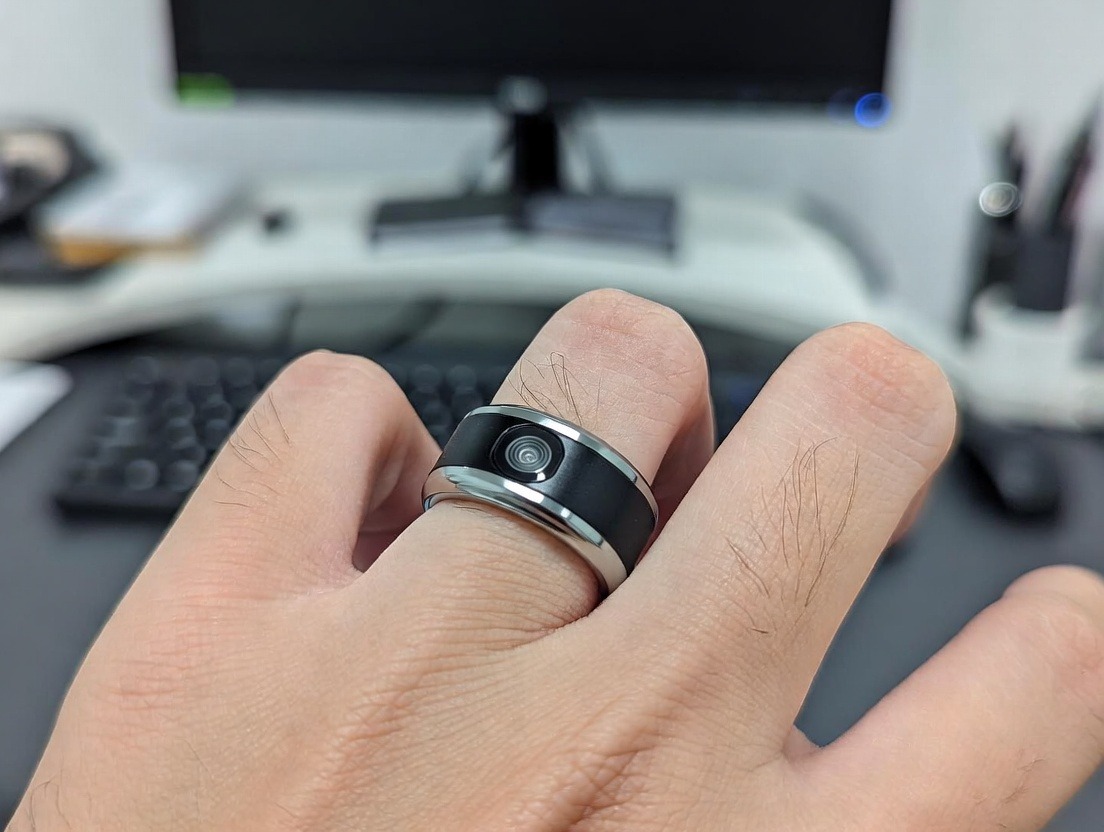
At first glance, a wellness ring is a marvel of minimalist design. But nestled within its compact form is a sophisticated orchestra of sensors, each playing a critical role in data collection. This isn't a single instrument but an ensemble working in concert.
The most pivotal player is the Photoplethysmography (PPG) sensor. This mouthful of a term describes a deceptively simple technology: it emits green, red, and sometimes infrared LED light into the skin of your finger. As your heart beats, blood volume in the capillaries changes, modulating how much light is absorbed versus reflected back to the sensor. This optical signature is the primary source for your heart rate (HR) and, more importantly, the nuanced timing between each beat—the foundation for Heart Rate Variability (HRV). The finger is an ideal location for this, often providing a stronger, less noisy signal than the wrist due to denser capillary beds and less movement interference.
Supporting this is the 3-axis accelerometer. This micro-electromechanical system detects motion and orientation in three-dimensional space. It’s the workhorse for activity tracking, step counting, and, crucially, distinguishing between wakefulness and sleep states by recognizing patterns of movement (or lack thereof). It helps the algorithm filter out “noise”—like an elevated heart rate from typing vigorously—from true physiological signals.
Many advanced rings also incorporate a skin temperature sensor. This isn’t measuring the temperature of the room, but the subtle fluctuations of your body’s peripheral temperature, which follows a circadian rhythm and can be influenced by ovulation, illness, or poor recovery. Finally, a battery of other potential sensors like pulse oximeters (SpO2) for blood oxygen levels and galvanic skin response (GSR) sensors for electrodermal activity (a stress indicator) may also be present.
The true genius lies in sensor fusion. An algorithm doesn’t trust just one data stream. It cross-references them. A spike in heart rate without corresponding accelerometer data (like during a stressful meeting) tells a very different story than the same spike with high motion (like during a run). This multi-source validation is what begins to separate basic trackers from insightful health monitors, laying the groundwork for the complex analytics to come. For a deeper dive into how sensor technology has evolved, our wearable health tech guide on understanding sensor technology explores this in detail.
If resting heart rate is the steady drumbeat of your cardiovascular system, Heart Rate Variability is the complex, syncopated jazz solo happening between each beat. It is the measure of the subtle variations in time intervals between successive heartbeats, measured in milliseconds. Counterintuitively, a higher, more variable HRV is generally a sign of a healthy, resilient, and adaptable nervous system.
But how does a ring, looking at a messy, continuous PPG signal, extract this precise metric? The journey from light to HRV score is a multi-stage feat of signal processing:
Your ring’s app likely provides a single, simple HRV number—often an average of your nightly RMSSD during deep sleep, which is considered the cleanest reading. This number is then contextualized. The algorithm compares your daily reading to your own personal baseline, not a population average. A downward trend might indicate training overload, impending illness, or high stress, while an upward trend suggests good adaptation and recovery. This personalized, trend-based insight is where the true power of HRV for improving wellness over time becomes apparent, moving beyond a single day’s snapshot to a story of your body’s evolving capacity.
One of the most sought-after features of a wellness ring is detailed sleep analysis. It’s crucial to understand that consumer devices, including rings and watches, do not measure sleep stages directly. Unlike a clinical polysomnogram (PSG) that uses EEG electrodes on the scalp to measure brain waves, your ring is making an educated, algorithmic inference based on physiological proxies.
The algorithm synthesizes three primary data streams throughout the night:
By training machine learning models on thousands of hours of data from people wearing both a PSG and a wearable device, companies have created algorithms that can predict sleep stages with increasing (though not perfect) accuracy. The algorithm looks at the combination of your movement, heart rate, and HRV at any given 30-second or 1-minute “epoch” and assigns a probability: “This pattern most closely resembles Deep Sleep,” or “This looks like REM.”
It then stitches these epochs together, applying rules of sleep architecture (e.g., you typically cycle through stages in a certain order, you don’t jump from wake to deep sleep instantly) to create your sleep timeline. The result is a remarkably detailed portrait of your night, highlighting duration, consistency, and the balance of restorative stages. This insight is central to the overnight advantage for sleep quality that rings provide, offering a non-invasive window into one of the most critical pillars of health.
Beyond the cycles of a single night lies a broader, slower rhythm that governs nearly every aspect of your biology: your circadian rhythm. This internal 24-hour clock regulates hormone release, metabolism, alertness, and, of course, sleep-wake cycles. Your wellness ring acts as a detective, piecing together clues to estimate the state of this internal timekeeper.
The most significant clue is peripheral body temperature. Your core body temperature stays relatively stable, but the temperature of your extremities, like your fingers, follows a distinct circadian wave. It is typically lowest in the early morning hours (around 4-5 AM) and begins to rise as you wake, acting as a signal to your body to increase alertness. In the evening, as melatonin secretion begins, peripheral vessels dilate to release heat, causing a slight increase in finger temperature before it gradually declines overnight. A disrupted or flattened temperature rhythm can signal circadian misalignment, such as jet lag or social jet lag from late nights.
The ring’s algorithm continuously monitors these subtle fluctuations (often to 0.1°C precision) using its thermal sensor. It looks for the nightly nadir (lowest point) and the overall shape of the 24-hour curve. When combined with data on sleep timing and consistency and daily activity patterns, the algorithm can infer the strength and phase of your circadian rhythm.
For women, this temperature tracking becomes especially powerful in conjunction with heart rate data. A sustained shift in both resting heart rate and waking basal body temperature is a key biomarker for ovulation, allowing the ring to provide detailed hormonal and cycle tracking insights. This integration of multiple biometrics transforms the ring from a sleep tracker into a holistic rhythm reader, helping you align your habits with your body’s innate timing for optimal well-being.
This is often the central number users check each morning: the Readiness, Recovery, or Energy Score. It’s a single, digestible metric meant to answer the question, “Am I physically prepared to take on stress today, or do I need more recovery?” It is not a measure of how you feel (which can be subjective), but of how your body has responded to the previous days’ stressors.
This score is the culmination of all the previously discussed metrics, fed into a complex, proprietary algorithm. While the exact formulas are trade secrets, they generally weigh inputs from several key categories:
The algorithm normalizes each of these inputs against your personal baseline—not a generic ideal. It then combines them, often using machine learning models trained on outcomes like self-reported fatigue or performance decrements. The result is a recommendation: push hard, proceed with caution, or prioritize rest. This synthesis of data is what makes the ring an invaluable tool for athletes looking to transform their training through recovery insights, preventing overtraining and optimizing performance.
The term “stress” in wellness tracking doesn’t refer to psychological feelings of being overwhelmed, but to a measurable physiological state of arousal driven by your autonomic nervous system (ANS). The ANS has two branches: the sympathetic (fight-or-flight) and the parasympathetic (rest-and-digest). Your ring’s “stress” metric is an algorithmic estimate of the balance between these two forces at any given moment.
The primary input for this is, once again, Heart Rate Variability, specifically its frequency components. High-frequency (HF) power in HRV is closely linked to parasympathetic (vagal) activity. When the algorithm detects a suppression of this HF power and a shift in the HRV pattern, it infers increased sympathetic drive—physiological stress.
However, to avoid mislabeling exercise as “stress,” the algorithm is critically dependent on context from the accelerometer. A sympathetic surge during a workout is expected and is categorized as “exertion.” The same surge while you’re sitting at your desk is tagged as “stress.” Many rings also use heart rate itself; a elevated HR without motion is a strong stress indicator.
Some advanced devices may also model all-day stress by looking at the balance of your day. How much time was spent in a high-heart-rate state (sympathetic) versus a truly low, recovered state (parasympathetic)? A day filled with back-to-back meetings, even without exercise, can show a significant “stress load.”
By quantifying this previously invisible burden, the ring provides an objective mirror to your life. It can reveal the physiological cost of a hectic workday or the calming effect of a meditation session, helping you identify triggers and validate coping strategies. This objective feedback loop is a cornerstone for those seeking to reduce stress and anxiety naturally, by connecting internal states with external causes.
This is the most critical concept in algorithmic wellness: personalization. The numbers that matter are not the absolute values, but the deviations from your own established norm. A heart rate variability of 40 ms might be excellent for one person and a sign of severe fatigue for another. Your ring’s true intelligence emerges as it learns what is typical for you.
The process of establishing this baseline isn't instantaneous. Over a period of several weeks (often a full month), the algorithm passively collects data on you in various states—sleeping, relaxing, exercising, working. It calculates your average resting heart rate, your typical HRV range, your normal sleep duration, and your circadian temperature curve. It understands your unique physiology and lifestyle.
Once this baseline is established, the algorithm’s primary mode of analysis becomes anomaly detection. It flags meaningful deviations. For instance:
This shift from comparative (you vs. population) to longitudinal (you vs. yourself) analysis is revolutionary. It means the ring’s guidance is tailored exclusively to your body’s signals. It empowers a truly personalized approach to unique biology, making the data profoundly more relevant and actionable for the individual wearing it.
While not their primary strength, wellness rings do provide activity and calorie burn estimates. It’s important to understand the limitations and science behind these figures, as they are among the most inferred (and often least accurate) metrics.
Step Count and Active Minutes are derived primarily from the accelerometer. The algorithm looks for rhythmic, cyclical motion patterns that match a human gait. However, finger movement is less directly tied to steps than wrist or hip movement. Rings can underestimate steps if your hands are stationary (like pushing a stroller) or overestimate them from hand gestures. More advanced algorithms use the combination of accelerometer data and heart rate to better classify activity type and intensity.
Caloric Expenditure is a highly complex estimation. The ring uses a multi-step process:
The total Total Daily Energy Expenditure (TDEE) is thus: TDEE = BMR + AEE + TEF.
Crucially, these are estimates with significant margins of error, perhaps 15-25%. They are best used for observing trends and relative changes rather than taking the number as an absolute truth. For someone using their ring to support weight management goals, the consistency of the measurement is more valuable than its perfect accuracy, as it shows the impact of different activities and days over time.
No technology is infallible, and understanding the limitations of your wellness ring is key to trusting it wisely. The algorithms, while sophisticated, operate under certain constraints and can be misled.
Common Sources of Error and Noise:
How the Algorithm Tries to Compensate:
This is where advanced signal processing shines. Algorithms employ:
Recognizing these limitations fosters a healthier relationship with the device. It becomes a guide, not a gospel. The focus should be on trends over time and substantial deviations, not day-to-day fluctuations or absolute precision. This realistic perspective is part of making health data truly actionable, based on reliable patterns rather than isolated, potentially noisy data points.
The intimacy of the data collected by a wellness ring—your sleep patterns, stress levels, physiological trends—necessitates a serious discussion about privacy and security. When you use these devices, you are participating in a data exchange. Understanding this paradigm is part of being an informed user.
Data Flow and Storage:
Typically, the raw sensor data is processed initially on the ring itself into derived metrics (heart rate, motion counts). This data is then encrypted and transmitted via Bluetooth to your smartphone app. From there, it is usually uploaded to the company’s cloud servers. This cloud storage is essential for maintaining long-term trends, performing complex retrospective analyses, and syncing data across your devices.
Algorithmic Processing:
The heavy lifting of the algorithms—calculating your sleep stages, HRV, readiness score, and long-term baselines—almost always occurs in the cloud, not on the ring. The ring is a data collector; the cloud is the brain. This allows for the use of powerful, continually improving machine learning models that would be too computationally heavy for a tiny device.
Key Privacy Considerations:
Choosing a company with transparent, strong data governance is crucial. The benefit of continuous, intimate health monitoring should not come at the cost of your personal privacy. A well-designed device should offer powerful insights while helping you protect your privacy and data, putting you in control of your most personal information.
We’ve explored how algorithms use established physiological models to interpret data. But the cutting edge of wellness technology lies in moving from static algorithms to adaptive machine learning (ML) systems. This is where your ring transitions from a smart interpreter to a personal health coach that learns from you.
Traditional algorithms apply fixed rules: "If HRV drops by X% and RHR rises by Y%, then lower the recovery score." Machine learning models, however, discover patterns and relationships on their own. They are trained on massive datasets where the inputs (sensor data) are paired with known outcomes (like self-reported mood, diagnosed illness, or lab-measured fitness improvements). The model learns which combinations of signals are most predictive.
For you, the user, this means two powerful things:
This evolution is what will separate the next generation of wearables. It’s the shift from descriptive analytics (“here’s what happened”) to prescriptive guidance (“here’s what to do about it”). This level of tailored feedback is key to creating the kind of effortless health tracking that integrates seamlessly into life, offering the right insight at the right time without overwhelming the user.
Your wellness ring is not an island. Its true potential is unlocked when its data is integrated with other streams of your health and life, creating a holistic dashboard of your well-being. This is the concept of data fusion at the ecosystem level.
Modern wellness platforms allow you to connect your ring data with:
When these disparate data streams flow together, the ring’s algorithms can perform contextual enrichment. Instead of just saying “stress was high at 3 PM,” it can say, “stress was high during your weekly project review meeting.” Instead of “sleep was restless,” it might correlate with “sleep was restless following a late, high-carb dinner.”
This creates a powerful, unified narrative. You’re no longer looking at biometric data in a vacuum. You’re seeing the direct, measurable impact of your lifestyle choices—from work to workouts to meals—on your underlying physiology. This comprehensive view is what enables wearables to support preventive healthcare in a meaningful way, moving from tracking illness to optimizing daily habits for long-term health.
A critical and often-asked question is: “How accurate is this compared to medical equipment?” The relationship between consumer wellness rings and the medical establishment is evolving from skepticism to cautious collaboration.
It’s vital to understand the distinction between clinical accuracy and trend accuracy.
Wellness rings excel at trend accuracy. For managing chronic conditions, understanding recovery, or tracking lifestyle interventions, seeing a reliable trend is often more valuable than a single, clinically precise data point.
However, the landscape is shifting. Several ring manufacturers are now pursuing and obtaining FDA clearances for specific metrics, such as:
This clinical validation is a game-changer. It means the data on your finger is moving closer to the data a doctor would trust. It empowers users with information that can inform important healthcare conversations. Bringing this validated, long-term trend data to a physician is something your doctor will genuinely appreciate, as it provides objective, longitudinal evidence far beyond the snapshot of an annual check-up.
The most profound impact of a wellness ring may not be in the insights it provides, but in the passive, frictionless nature of its data collection. Unlike a smartwatch that requires charging nightly or a chest strap you must remember to wear for a workout, the ring’s design promotes continuous wear. This creates an uninterrupted data stream, which is the foundation for meaningful behavior change.
Psychological and behavioral science principles at work here include:
This passive loop is transformative. Because the ring works in the background, it doesn’t rely on your motivation or memory. It gathers truth, and in doing so, it gently highlights the gap between intention and reality. Over time, this consistent, objective feedback is what helps create better health habits for the long term, turning sporadic efforts into ingrained routines.

Let’s translate this science into a real-world narrative. Follow “Alex” through a week, seeing how the algorithms interpret her life.
Day 1 (Sunday): Alex enjoys a relaxed day and goes to bed at her usual time. Algorithms at work: The ring records a textbook sleep architecture with strong deep sleep, a low and steady heart rate, and a high HRV. Morning Readiness Score: 90 (Optimal). The algorithm notes all metrics are at or above personal baseline.
Day 2 (Monday): A stressful work deadline leads to two late-night hours at the computer. Algorithms at work: The accelerometer shows prolonged stillness starting 2 hours later than baseline. The PPG sensor shows elevated heart rate and lowered HRV during the late work period (tagged as “stress”). Sleep is shorter with less REM. Morning Readiness Score: 72. The score is pulled down by short sleep, elevated resting HR, and higher stress load from the previous day.
Day 3 (Tuesday): Ignoring the lower score, Alex pushes through a heavy gym session. Algorithms at work: The workout is logged as high “exertion” (high HR + motion). That night, her HRV plummets well below baseline, and her resting heart rate remains elevated—classic signs of insufficient recovery. Morning Readiness Score: 65 (Recover). The algorithm now strongly weights the combination of prior sleep deficit, high activity load, and poor overnight recovery metrics.
Day 4 (Wednesday): Heeding the score, Alex takes a true rest day: light walking, an early bedtime. Algorithms at work: The low activity allows parasympathetic recovery to begin. Her sleep is long, and her deep sleep rebounds as her body prioritizes physical repair. Her HRV begins to climb back up. Morning Readiness Score: 78 (Balanced). The algorithm sees positive momentum but notes metrics are still returning to baseline.
Day 5 (Thursday): Alex feels fine, but her waking temperature is +0.4°C above her personal norm. Algorithms at work: The thermal sensor flags a significant deviation. The algorithm cross-references this with a slightly elevated resting heart rate and a small dip in HRV. The Readiness Score is suppressed to 70, with a note: “Elevated temperature detected. Consider taking it easy.” By evening, Alex feels the onset of a cold.
This narrative shows the algorithms not as a daily judge, but as a longitudinal storyteller, connecting cause and effect across days. It demonstrates how the ring supports continuous tracking that beats periodic check-ups, catching subtle shifts a weekly doctor’s visit never could.
To truly own your data, understanding the language is key. Here’s a decoder for common terms in your app:
As these algorithms become more influential in our health decisions, we must confront their ethical dimensions. Algorithms are not neutral; they are created by humans and trained on data, both of which can introduce bias.
Potential Pitfalls to Be Aware Of:
Your Responsibility as a User:
Ultimately, the most ethical algorithm is an empowered user. Understanding that these are estimation tools designed to empower health data ownership puts you in the driver’s seat, using technology as a lens for self-knowledge, not as an oracle.
Collecting data is pointless without a framework for action. The final step in this journey is transforming algorithmic outputs into a Personal Health Operating System (PHOS)—a dynamic set of rules and habits you create based on your unique data patterns.
Here’s how to build yours:
Your wellness ring is the sensor network and data processor for your PHOS. You are the CEO, making strategic decisions based on the intelligence report. The algorithms provide the “what” and the “when”; you provide the “why” and the “how.”
We have journeyed from the flicker of green light in a capillary to the complex, adaptive algorithms that transform it into a story of your health. We’ve seen that these devices are not mystical oracles, but sophisticated tools built on established physiology, signal processing, and increasingly, machine learning.
The key takeaways are:
This understanding fosters a new relationship with your device—one of empowered partnership, not passive consumption. You are no longer just a user of technology; you are the conductor of your own well-being, using a powerful, algorithmically-driven instrument to tune the symphony of your health.
In the next portion of this exploration, we will dive even deeper into specific applications: optimizing performance for athletes, navigating hormonal health, managing chronic conditions, and exploring the frontier of what this continuous stream of data means for the future of personalized medicine and our very understanding of what it means to be well. The journey from data to wisdom is just beginning.
For the dedicated athlete, from the weekend warrior to the elite competitor, a wellness ring is far more than a sleep tracker—it’s a continuous biofeedback lab. The algorithms we’ve discussed become the cornerstone of quantified autoregulation, moving training from pre-set schedules to a dynamic conversation with the body.
At the heart of this is the Fitness-Fatigue Model. Advanced algorithms don’t just look at yesterday’s workout; they model two opposing forces:
The ring’s readiness or recovery score is essentially a snapshot of this balance. A high score suggests fatigue has dissipated, revealing elevated fitness—the perfect time for a hard session. A low score indicates fatigue is dominant, signaling a need for rest or very light activity to avoid digging a deeper hole.
Personalizing Intensity: The HRV-Guided Approach
The most cutting-edge application is using daily HRV readings to modulate training. The algorithm establishes your individual, sport-specific baseline. Protocols like HRV-guided training then use morning deviations to prescribe the day’s effort:
This method has been shown in studies to improve performance gains more efficiently than rigid periodization, as it prevents non-functional overreaching. This is the essence of how rings provide recovery insights that transform training, making every workout count.
The Sleep-Performance Nexus:
For athletes, sleep is non-negotiable recovery fuel. Algorithms break down sleep into actionable metrics:
By correlating sleep stage data with next-day performance metrics (like power output or perceived exertion), athletes can identify their personal “sleep requirement” for optimal performance. The ring’s passive tracking makes this analysis effortless, providing the 24/7 health monitoring without bulk that athletes need during both training and rest.
For women, the standard “one-size-fits-all” health algorithm is fundamentally flawed. A woman’s physiology is governed by a complex, cyclical hormonal landscape that directly impacts every metric a ring measures. The next generation of algorithms is finally accounting for this, turning the ring into a powerful hormonal compass.
Cyclical Baselines: The Core Innovation
Instead of comparing a woman’s daily data to a single, static 30-day average, advanced algorithms now create phase-specific baselines. They use a combination of user-logged cycle data and the ring’s own biometrics to map the cycle:
This means a higher RHR in the luteal phase isn’t flagged as “poor recovery” but is recognized as “normal for this phase.” This prevents misinterpretation and anxiety, providing truly personalized insights that empower women with cycle tracking and hormonal insights.
Predictive Power and Symptom Correlation:
By analyzing months of data, algorithms can:
This represents a seismic shift from viewing the female cycle as a confounding variable to recognizing it as the central, informative rhythm of health. It’s a prime example of technology moving to personalize for unique biology.
Wellness rings are not just for the young and athletic. For seniors and those focused on healthy aging, these devices offer a powerful, discreet tool for maintaining independence and catching early signs of deviation. The algorithms here are tuned to detect subtle declines and promote proactive intervention.
Key Aging Metrics and Algorithmic Guardrails:
The Independence Algorithm:
Perhaps the most profound application is anomaly detection for independent living. By learning an individual’s normal patterns of sleep, activity, and heart rate, the algorithm can detect significant deviations that may indicate a fall (a sharp movement followed by prolonged stillness), a sudden illness, or a concerning change in daily routine. This allows for discreet check-ins from family or caregivers, providing peace of mind and enabling seniors to live independently longer. This specific benefit is a cornerstone of how smart rings benefit seniors.
The world of work is undergoing a well-being revolution, and wearable data is at its forefront. Forward-thinking organizations are leveraging aggregated, anonymized data from wellness rings to move from generic wellness programs to data-driven organizational health optimization.
From Burnout Prediction to Productivity Mapping:
Algorithms can analyze trends across teams to identify:
On an individual level, employees can use their own data to improve work performance and productivity. The algorithm can help them discover their personal ultradian rhythm—the 90-120 minute cycles of focus and fatigue. By noting when their physiological stress rises and focus wanes, they can schedule deep work during peak focus times and take genuine breaks during natural troughs, leading to more sustainable output.
The Ethical Corporate Model:
The ethical use of this data is paramount. Best practices include:
This approach creates a win-win: a healthier, more resilient, and more focused workforce, and employees equipped with deep knowledge about how their work life affects their biology.
Mental well-being has long been subjective, reliant on self-reporting. Wellness ring algorithms are beginning to bridge this gap by identifying objective biometric correlates of mental states, offering a tangible mirror to our inner world.
The Stress-Anxiety Feedback Loop:
We discussed stress as autonomic arousal. For those with anxiety, this physiological state can become chronic. The ring’s algorithm provides two crucial functions:
Sleep and Mood Correlation:
Algorithms can meticulously map the relationship between sleep architecture and emotional resilience. They can reveal that nights with low REM sleep are followed by days with higher self-reported irritability or emotional reactivity. This turns an abstract concept (“I’m grumpy when I don’t sleep well”) into a quantified, predictable relationship, motivating better sleep hygiene.
Detecting Depressive Trends:
While not diagnostic, long-term algorithmic trends can show patterns associated with low mood: profoundly disrupted circadian rhythms (highly irregular sleep/wake times), a flattened body temperature curve, persistently low HRV, and reduced daytime activity. These trends can serve as an early, objective flag that prompts a person to seek professional help or reach out to their support network.
This technology provides a form of continuous self-awareness, helping individuals connect their habits, environment, and thoughts to their physiological state. It demystifies mental well-being, making it something that can be understood and actively managed. The surprising benefits for mental health stem from this very ability to make the invisible visible.
For frequent travelers and remote workers across time zones, the wellness ring becomes an essential tool for circadian hacking. Jet lag is more than fatigue; it’s a state of internal desynchrony where your body’s clocks are out of sync with the external environment. The ring’s algorithms provide a real-time map of your internal time and a plan to reset it.
Phase Response Curve in Action:
The core algorithm is based on the science of the phase response curve (PRC), which predicts how light, food, and exercise at specific times will shift your internal clock forward or backward. The ring uses your current circadian phase (inferred from temperature minimum and sleep timing) and your destination time zone to generate a personalized plan:
The Real-Time Adjustment Dashboard:
While traveling, the ring continuously monitors your progress:
By providing a daily “circadian alignment score,” the traveler can see if their tactics are working. This transforms a debilitating process into an optimized, biohacked experience. It’s a prime example of the benefits for travelers tracking health across time zones.

New parents operate in a state of prolonged physiological stress, characterized by severe sleep fragmentation and constant demand. The wellness ring’s algorithms are uniquely suited to support this life stage not by providing perfect scores (an impossibility), but by offering realistic benchmarking and micro-recovery insights.
The Fragmented Sleep Analysis:
Traditional sleep scoring fails with parental sleep. Advanced algorithms can now:
The Stress-Response Mapping for Caregivers:
Parenting stress is acute and chronic. The ring helps by:
The Family Health Ecosystem:
As children grow, the principles of circadian health, sleep consistency, and activity apply to them as well. Parents using this technology become more attuned to the biological foundations of family health, creating routines that support everyone’s well-being. For new parents, this technology is less about optimization and more about survival insight, a crucial support for new parents tracking sleep and recovery.
For individuals managing chronic conditions like hypertension, metabolic syndrome, insomnia, or autoimmune disorders, the wellness ring shifts from an optimization tool to a management and discovery tool. The continuous data stream provides a rich tapestry of information that can reveal triggers, track progression, and measure the impact of interventions with unprecedented granularity.
Hypertension & Cardiovascular Health:
While the ring doesn’t measure blood pressure directly, its algorithms provide powerful proxies:
Metabolic Health (e.g., Prediabetes, Type 2 Diabetes):
Key algorithms focus on:
The “N-of-1” Experimentation Platform:
This is the most powerful aspect. The patient can use the ring to run personal experiments:
This turns the patient into an active researcher of their own condition, generating data that can lead to more productive conversations with their doctor. This proactive, data-informed approach is foundational to how these devices support preventive healthcare and can help detect issues early.
For students navigating the intense cognitive and lifestyle demands of academia, a wellness ring offers a covert lab partner. The algorithms can reveal the direct, often surprising, links between physiological states and academic performance, focus, and mental stamina.
The Sleep-Grade Correlation Engine:
The most straightforward algorithm looks at sleep consistency vs. academic deadlines. It can graphically demonstrate how erratic sleep schedules during exam week correlate with lower reported focus or poorer performance on assignments. More subtly, it can track REM sleep, which is crucial for memory consolidation and learning. A pattern of low REM sleep during heavy study periods may explain difficulty retaining information.
Cognitive Load and Stress Biomarkers:
Studying is cognitively demanding, which induces physiological stress. The ring’s algorithm can:
The Exam Performance Predictor:
By analyzing data from previous exam periods, a student can identify their personal “peak performance” physiological formula. It might be: “On days where my sleep efficiency was >88%, my resting heart rate was within 2 bpm of baseline, and my morning HRV was high, I performed best.” They can then use the ring’s daily scores to strategically approach exam days, perhaps prioritizing extra sleep over last-minute cramming if their recovery score is low.
This moves student wellness from vague advice (“get more sleep”) to a personalized, data-driven strategy, directly linking daily habits to cognitive outcomes. It’s a powerful tool to help students improve academic performance through wellness.
Your body is not isolated; it is in constant dialogue with its environment. The next frontier for wellness ring algorithms is to act as a proxy environmental sensor, correlating external factors with internal biometric responses.
The Micro-Environment Detectives:
The Digital Environment: Screen Time’s Physiological Signature:
This is a powerful, underrated application. By syncing with smartphone digital wellness APIs (with permission), the algorithm can correlate:
This turns abstract warnings about screen time into concrete, personal cause-and-effect data, empowering more mindful digital habits for the sake of physical well-being.
Your Trusted Sleep Advocate: Sleep Foundation — https://www.sleepfoundation.org
Discover a digital archive of scholarly articles: NIH — https://www.ncbi.nlm.nih.gov/
39 million citations for biomedical literature :PubMed — https://pubmed.ncbi.nlm.nih.gov/
Experts at Harvard Health Publishing covering a variety of health topics — https://www.health.harvard.edu/blog/
Every life deserves world class care :Cleveland Clinic - https://my.clevelandclinic.org/health
Wearable technology and the future of predictive health monitoring :MIT Technology Review — https://www.technologyreview.com/
Dedicated to the well-being of all people and guided by science :World Health Organization — https://www.who.int/news-room/
Psychological science and knowledge to benefit society and improve lives. :APA — https://www.apa.org/monitor/
Cutting-edge insights on human longevity and peak performance:
Lifespan Research — https://www.lifespan.io/
Global authority on exercise physiology, sports performance, and human recovery:
American College of Sports Medicine — https://www.acsm.org/
Neuroscience-driven guidance for better focus, sleep, and mental clarity:
Stanford Human Performance Lab — https://humanperformance.stanford.edu/
Evidence-based psychology and mind–body wellness resources:
Mayo Clinic — https://www.mayoclinic.org/healthy-lifestyle/
Data-backed research on emotional wellbeing, stress biology, and resilience:
American Institute of Stress — https://www.stress.org/


