


How Your Wellness Ring Measures Your Daily Vitality Levels
Your wellness ring provides measurements of your daily vitality.
Your wellness ring provides measurements of your daily vitality.
%402x.svg)
For centuries, the quest to quantify human vitality was an exercise in guesswork and vague feelings. "I feel run down," "I have lots of energy today," "I'm not sleeping well"—these were our only metrics. The most advanced health monitor was a finger on a wrist, counting pulses for a fleeting 15-second snapshot. Our understanding of our own daily vitality was, fundamentally, anecdotal and fragmented.
Then, a revolution shrank and slipped onto our fingers.
The modern wellness ring is not merely a piece of jewelry with tech inside; it is a 24/7 biometrical observatory, a silent guardian tuned to the fundamental rhythms of your existence. It captures the invisible, continuous pulse of your physiology—the ebb and flow of your nervous system, the silent work of recovery during sleep, the subtle stresses of a demanding day. It translates the complex symphony of your body's autonomous functions into a comprehensible dashboard of your daily vitality.
But what does "vitality" truly mean in a data-driven context? It’s not just the absence of fatigue. True vitality is a state of physiological readiness, resilience, and efficient energy. It's your heart's ability to respond gracefully to stress, your nervous system's capacity to balance effort with restoration, your brain's access to deep, restorative sleep. It’s the foundational energy that powers everything from your morning workout to your afternoon focus and your evening patience.
This article is your deep dive into the engine room of this remarkable technology. We will peel back the layers of sleek design and user-friendly apps to explore exactly how your wellness ring measures your daily vitality levels. We’ll journey from the raw flicker of light against your skin capillaries to the sophisticated algorithms that transform trillions of data points into a single, insightful "Readiness Score." We’ll demystify the core metrics—Heart Rate Variability (HRV), Resting Heart Rate (RHR), Sleep Architecture, Body Temperature, and Respiratory Rate—and reveal why their interplay is more telling than any single number.
This knowledge transforms you from a passive data observer into an active participant in your own well-being. By understanding the how, you gain the power to interpret the why behind the numbers. You’ll learn to see beyond a "good" or "bad" score and understand the nuanced story your body is telling you every single day. This is the first step towards moving from simply tracking data to truly understanding how your wellness ring turns metrics into actionable health strategies, enabling a proactive approach to lifelong health and building a powerful tool for multi-decade health planning.
Welcome to the new era of self-knowledge. Welcome to understanding the invisible pulse of your life.
Before we examine the sensors and algorithms, we must first redefine what we're measuring. The concept of "vitality" has evolved. Historically, it was a philosophical or spiritual essence, an intangible force that animated living beings. In modern wellness, we've borrowed the term but grounded it in physiology. Today, vitality is the measurable capacity of your biological systems to function optimally, adapt to stress, and regenerate.
Think of your body as a complex city. Vitality isn't just whether the lights are on (you're awake). It's about the efficiency of the power grid (your autonomic nervous system), the quality of the nightly maintenance crews (sleep and recovery), the resilience of the transportation network (your cardiovascular system), and the stability of the internal environment (homeostasis). A city can be "functioning" with traffic jams and brownouts, but it isn't vital. Similarly, you can be "functioning" on poor sleep and high stress, but your underlying vitality is depleted.
The wellness ring acts as the city's central monitoring station. It doesn't just count cars (heartbeats); it analyzes traffic patterns (HRV), monitors power consumption (calories/energy expenditure), checks the integrity of roads (vascular health via pulse waveform), and ensures the climate control is stable (body temperature). This holistic, systems-based view is what separates modern biometric tracking from the step-counters of the past.
This shift is profound. It moves us from behavioral tracking (how many steps did I take?) to physiological tracking (how did my body respond to those steps, and what is its current state of readiness for more?). This is the core of proactive health management. By quantifying vitality, we gain an objective baseline. We can see the impact of our choices—that late-night meal, that intense workout, that meditation session—not just on our weight or muscle soreness, but on our fundamental physiological resilience. This data-driven insight is the cornerstone of creating a personalized, lifelong health strategy that balances discipline with flexibility, moving you toward the ultimate goal of maximizing your healthspan.
The philosophy embedded in your ring is one of continuous, unobtrusive listening. It recognizes that your most important health signals aren't captured in a yearly doctor's visit, but in the minute-by-minute rhythms of your daily life. By making the invisible visible, it empowers you to become the chief architect of your own vitality.
A wellness ring is a masterpiece of miniaturization. Within its compact, often waterproof form, a symphony of sophisticated sensors works in perfect harmony to capture a multi-dimensional picture of your physiology. Unlike a smartwatch with a large surface area, a ring must achieve remarkable precision from a tiny, curved platform on a finger that experiences significant movement and temperature changes. Here’s how the core hardware components function:
Photoplethysmography (PPG) Sensors: This is the workhorse, the primary source for most cardiovascular data. PPG uses tiny LEDs (usually green and sometimes infrared or red) to shine light into the capillaries just beneath the skin on the underside of your finger. A photodetector then measures the amount of light that is reflected back. Blood absorbs light, so when your heart beats and pushes a pulse of blood through your capillaries, the amount of reflected light decreases slightly. Between beats, it increases. This constant, subtle fluctuation creates a waveform—a photoplethysmogram—that is essentially a continuous pulse wave. From this fundamental signal, a world of data is extracted: heart rate, heart rate variability (by analyzing the precise timing between beats), blood oxygen saturation (SpO2) by comparing absorption of different light wavelengths, and even insights into vascular stiffness and blood flow.
Skin Temperature Sensor: Typically a negative temperature coefficient (NTC) thermistor, this sensor makes continuous contact with your skin to measure its peripheral temperature. It’s incredibly sensitive, capable of detecting changes as small as 0.01°C. This is not about diagnosing a fever, but about tracking your body’s subtle thermal rhythms. Core body temperature follows a circadian cycle, and peripheral skin temperature is its mirror, influenced by blood flow, sleep stages, hormonal changes (like ovulation), and the onset of illness. A sustained elevation in nighttime skin temperature can be an early signal that your body is fighting something off.
3-Axis Accelerometer & Gyroscope: These are the motion detectives. The accelerometer measures linear movement (up/down, side-to-side, forward/back), while the gyroscope measures rotational movement. Together, they provide a precise account of your activity levels, step count, and movement intensity. Crucially, they are also essential for sleep tracking. By analyzing minute movements, the ring can distinguish between wakefulness, light sleep, deep sleep, and REM sleep. They also enable features like automatic activity recognition (knowing when you’re walking, running, or cycling) and ensuring that heart rate data during intense movement is accurately processed.
The Battery and The Chip: Powering this 24/7 operation is a small but high-density lithium-ion battery, optimized for low-energy sensor operation and efficient wireless charging. The brain of the operation is a custom-built microcontroller or system-on-a-chip (SoC). This chip is a marvel of efficiency, managing power distribution, collecting raw sensor data thousands of times per second, performing initial processing, and handling Bluetooth Low Energy (BLE) communication to your smartphone. Its algorithms run locally on the ring to filter out noise (like motion artifact from hand gestures) and extract clean signal before transmission.
This hardware symphony operates continuously, creating a river of raw biometric data. But raw data is just noise. The true magic—the transformation of flickering light and minute movements into a coherent story of your vitality—happens in the next stage: the algorithmic mind. To appreciate the complexity of this transformation, you can delve deeper into our complete guide on understanding wellness ring health metrics.
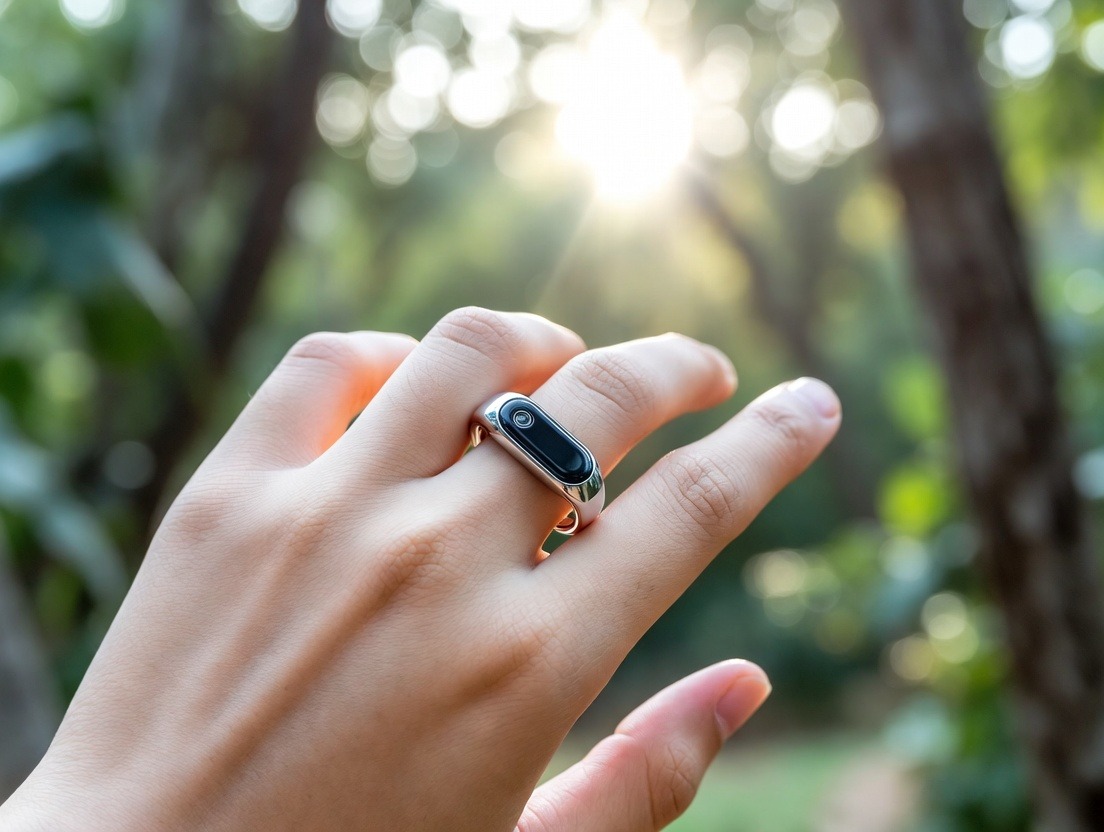
Let's zoom in on the star performer: the PPG signal. That flicker of reflected green light is a biological goldmine. When you look at the raw PPG waveform on an oscilloscope, you see a series of peaks and troughs. Each peak corresponds to a heartbeat—the systolic phase where blood is ejected. The trough is the diastolic phase where the heart refills. The distance between these peaks is not perfectly uniform. This imperfection is where the story lies.
Extracting Heart Rate (HR): This is the simplest derivation. The chip counts the number of peaks per minute. But it does this continuously, providing a real-time, beat-to-beat heart rate, not an average. Your resting heart rate (RHR), typically measured during sleep, is a key vitality metric. A lower RHR generally indicates a more efficient cardiovascular system and better aerobic fitness. But it’s also sensitive to stress, fatigue, illness, and dehydration. Tracking your RHR trend over time provides a clear window into your cardiovascular fitness and overall recovery status. For a detailed exploration of what this number truly means, you can read our explainer on understanding resting heart rate and its implications.
The Treasure of Heart Rate Variability (HRV): This is the crown jewel of physiological tracking. HRV is the measure of the slight variations in time between each heartbeat, measured in milliseconds. If your heart beats exactly once every second (60 BPM), your HRV would be zero—a sign of a stressed, inflexible system, often seen in severe illness or high sympathetic ("fight or flight") nervous system dominance. A healthy, resilient heart, under the balanced control of the parasympathetic ("rest and digest") nervous system, has subtle, moment-to-moment adjustments in pace. Higher HRV (within a normal, personalized range) is strongly associated with better stress resilience, cardiovascular health, metabolic fitness, and even emotional regulation.
Extracting HRV from a PPG signal is a computational feat. The ring must identify the exact millisecond of each pulse peak with extreme accuracy, despite motion and signal noise. It then creates a sequence of these "beat-to-beat" intervals (called RR intervals, even though it's from a pulse, not an ECG's R-wave). This sequence is then analyzed using time-domain (e.g., RMSSD, SDNN) and frequency-domain algorithms to quantify the variability. Your ring’s app typically presents a single, processed HRV number, often your "nighttime average" or a "morning readiness" reading, which is considered the most stable and reliable measure.
Blood Oxygen (SpO2): By utilizing both red and infrared LEDs (in addition to green), the PPG sensor can perform pulse oximetry. Hemoglobin with oxygen (oxyhemoglobin) absorbs infrared light differently than hemoglobin without oxygen (deoxyhemoglobin). By analyzing the absorption ratios of these two wavelengths synchronized with the pulse wave, the ring can estimate the percentage of oxygen-saturated hemoglobin in your blood. While not medical-grade, nighttime SpO2 trends can reveal patterns of breathing disturbances during sleep, a critical component of vitality and long-term health. Learn more about the connection between blood oxygen and overall wellness.
The humble PPG flicker, therefore, is a direct window into your autonomic nervous system, cardiovascular efficiency, and respiratory health. It is the foundational data stream from which a large portion of your vitality score is built, offering powerful insights that can even predict future health outcomes when tracked over time.
Given its paramount importance, HRV deserves its own dedicated exploration. Think of your autonomic nervous system (ANS) as the conductor of your body's orchestra. The sympathetic branch (SNS) is the accelerator, raising heart rate, blood pressure, and alertness for action. The parasympathetic branch (PNS), primarily via the vagus nerve, is the brake, slowing the heart, promoting digestion, and enabling restoration. HRV is the real-time readout of this tug-of-war.
When you are stressed, anxious, or physically exerted, the SNS dominates, leading to a more regular, metronomic heartbeat and lower HRV. When you are relaxed, meditating, or in deep sleep, the PNS gains influence, introducing subtle, healthy irregularities that increase HRV. Therefore, a high HRV doesn't mean your heart is "irregular" in a pathological sense; it means it is highly responsive and adaptable—a sign of resilience.
Your wellness ring tracks HRV continuously, but it pays special attention to your nocturnal HRV. During deep sleep, external stimuli are minimized, offering the cleanest reading of your baseline autonomic function and recovery capacity. A consistently high or rising nighttime HRV trend suggests you are recovering well, managing stress effectively, and building resilience. A sudden or sustained drop in HRV is a bright red flag from your body. It can indicate:
This is why HRV is often the primary input for "Readiness" or "Recovery" scores. It is your body's honest, unfiltered report on its internal resources. By learning to understand your HRV numbers simply, you can make daily decisions aligned with your physiology. A low readiness score driven by low HRV might prompt you to choose a gentle walk over a HIIT class, prioritize an early bedtime, or practice breathing exercises. This is the essence of data-informed vitality management.
It's crucial to remember that HRV is highly personal. Comparing your number to someone else's is meaningless. A 45 ms RMSSD might be excellent for one person and low for another. The power lies in tracking your trends over time and establishing your baseline. Your ring’s algorithms are designed to do just this, learning your unique rhythms so it can identify meaningful deviations. This personalized insight is key to building the autonomic nervous system balance that underpins lasting vitality.

Sleep is the non-negotiable pillar of daily vitality. It is when the body performs its most critical repair work: memory consolidation, hormone regulation (like growth hormone and cortisol), cellular cleanup, and immune system modulation. Your wellness ring doesn't just track "sleep duration"; it reverse-engineers the architecture and quality of your sleep, providing a detailed map of your night.
This process begins with data fusion. The 3-axis accelerometer detects the gross motor silence of sleep onset and the large body movements that may indicate a sleep stage shift or brief awakening. The PPG sensor provides the vital physiological signatures:
By combining movement (or lack thereof) with these distinct cardiovascular and respiratory patterns, sophisticated machine learning algorithms classify each minute (or 30-second epoch) of your night into one of four states: Wake, Light Sleep (N1/N2), Deep Sleep (N3), and REM Sleep.
From this detailed map, your ring calculates critical quality metrics:
Understanding your personal sleep architecture is transformative. You might learn you're getting 8 hours in bed but only 85% efficiency and very little deep sleep, explaining daytime fatigue. You might see how late alcohol consumption suppresses your REM sleep, or how a stressful day delays sleep onset. This granular view allows you to experiment and optimize, turning sleep from a mystery into a measurable, improvable process. For a full breakdown, explore our guide on understanding sleep stages and quality scores. This knowledge is a critical component of any strategy to prevent frailty in old age, as quality sleep is fundamental to cellular repair and hormonal health.
While your heart tells a dramatic story, your skin temperature whispers secrets about your internal state. The NTC thermistor in your ring provides a continuous stream of peripheral temperature data, which is a proxy for core temperature regulation and blood flow dynamics.
Your body temperature follows a clear circadian rhythm. It typically reaches its lowest point (nadir) in the early morning hours (around 4-5 AM) and begins to rise in the hours before waking, helping to promote alertness. It peaks in the late afternoon/early evening and then begins to decline to prepare the body for sleep. A robust, well-defined circadian temperature rhythm is a hallmark of good sleep-wake cycle health and overall metabolic regulation. A flattened rhythm can indicate circadian disruption from shift work, jet lag, or poor sleep habits.
Nighttime Baseline Deviation: Your ring establishes your personal nighttime temperature baseline. A sustained elevation of 0.5°C to 1.0°C above this baseline for one or more nights can be an extremely early indicator of physiological stress, often preceding noticeable symptoms. This could be your body mounting an immune response to a virus, fighting a local infection, or reacting to a significant vaccination. For women, this data is particularly powerful in revealing the thermal shifts of the menstrual cycle. A sustained rise in baseline temperature of about 0.3°C - 0.5°C after ovulation marks the shift to the luteal phase, providing clear, objective data on cycle regularity and phases.
Skin temperature also reacts acutely to your environment and behaviors. It will drop if your room is too cold or your blankets fall off, potentially fragmenting your sleep. It can rise after a heavy meal late at night as your body works to digest. By correlating temperature spikes or drops with other metrics (like increased nighttime heart rate or decreased HRV), you get a clearer picture of what disrupted your sleep.
This makes skin temperature a unsung hero in the vitality dashboard. It provides context for other metrics. A poor sleep score with a elevated temperature suggests your body was fighting something. A poor sleep score with a normal temperature might point more towards stress or environmental factors. Understanding these subtle health signals from body temperature adds a crucial layer of diagnostic depth to your daily data.
Vitality is a balance between exertion and recovery. The accelerometer and gyroscope in your ring provide the essential context of your daily activity, ensuring the physiological data isn't interpreted in a vacuum.
All-Day Activity Tracking: By measuring movement intensity and patterns, the ring estimates your caloric expenditure and logs your active minutes. It can automatically detect and classify activities like walking, running, cycling, and even specific workouts. This provides a clear picture of your daily energy output.
The Power of Non-Exercise Activity Thermogenesis (NEAT): Beyond formal workouts, the ring captures your NEAT—the calories burned through fidgeting, standing, walking to the printer, household chores. NEAT is a huge variable in daily metabolic rate and can be a powerful lever for weight management and metabolic health. Seeing your daily movement patterns can motivate you to take the stairs or have a walking meeting.
Activity and Readiness Integration: This is where context becomes king. The ring’s algorithm uses your activity data to help interpret your readiness metrics. For example, a low HRV and elevated resting heart rate the day after a particularly intense and long workout is likely a sign of appropriate fatigue and a need for recovery. The same metrics without a preceding intense workout could be a sign of emotional stress or impending illness. The ring "knows" what you did yesterday, so it can help you understand why your body is responding the way it is today.
Furthermore, the motion sensors are critical for ensuring data accuracy. They help the PPG algorithm identify and filter out "motion artifact"—noise in the heart rate signal caused by hand movements. This is why rings can provide accurate heart rate data during many types of exercise, not just during sleep.
By fusing motion data with physiological data, your ring paints a complete picture of the "stress-recovery" cycle. It shows you the stimulus (your activity/workout load) and the response (your HRV, RHR, and sleep quality). This feedback loop is the engine of intelligent training and sustainable energy management, helping you avoid the trap of overtraining and burnout indicated by your health metrics. It allows you to align your activity choices with your body's readiness, a key principle in creating a family health legacy built on listening to the body's signals.

We now arrive at the crucible where raw data becomes insight: the proprietary algorithms. The rivers of PPG waveforms, temperature points, and movement vectors flow into a computational engine designed to find meaning in the noise. This is not a simple averaging; it's a multi-layered process of analysis, correlation, and synthesis.
1. Signal Processing & Cleaning: The first layer is all about noise reduction. Algorithms filter out motion artifact from the PPG signal, smooth temperature readings, and distinguish between purposeful activity and random hand gestures. This ensures the underlying physiological signal is as clean as possible before feature extraction.
2. Feature Extraction: From the cleaned signals, specific "features" are pulled. From PPG: beat-to-beat intervals (for HRV), pulse amplitude, pulse wave shape. From temperature: nightly baseline, deviation from baseline, circadian curve shape. From motion: sleep stage classifications, activity intensity levels, step count.
3. Baseline Establishment & Personalization: This is the most critical step. Over your first weeks of wear, the algorithm learns you. It establishes your personal baselines for HRV, RHR, sleep duration, temperature rhythm, and activity levels. It understands what "normal" looks like for your body. This personalization is what makes the data actionable. A heart rate of 55 might be normal for one person and high for another.
4. Correlation & Synthesis: The algorithm doesn't view metrics in isolation. It looks at the relationships. It correlates a drop in HRV with a rise in skin temperature. It connects a poor deep sleep score with a higher next-day RHR. It weighs the impact of yesterday's high activity load on tonight's recovery metrics. This systems-level analysis mimics how a skilled human coach or doctor would interpret multiple data points together.
5. Scoring & Presentation: Finally, all this synthesized information is compressed into user-friendly scores and insights. The most common is the Readiness or Recovery Score (often on a 0-100 scale). This single number is a weighted composite of the night's key recovery metrics: HRV (heavily weighted), RHR, sleep quality, and sometimes temperature deviation. A high score suggests your body is primed for exertion; a low score suggests a need for rest. The Sleep Score is another composite, as are Activity Scores.
These algorithms are continuously refined through machine learning on large, anonymized datasets. They get better at sleep staging, illness prediction, and personalization over time. To appreciate the complexity behind these simple scores, you can explore how wellness ring algorithms calculate these complex health metrics. This intelligent synthesis is what enables the shift from overwhelming data to clear, actionable insights for goal setting.
You now understand the how. The final step in this portion of our journey is mastering the interpretation. Opening your wellness app to see a Sleep Score of 78 or a Readiness Score of 65 is just the beginning. The single most important principle in biometric tracking is this: Trends are truth; single data points are anecdotes.
A single night of poor sleep or a low HRV reading is usually noise. It could be due to a late dinner, a few drinks, an argument, or simply biological randomness. The danger lies in overreacting to a single point. The power lies in observing the direction and magnitude of changes over days, weeks, and months.
What to Look For in Trends:
Your ring’s app is designed to highlight these trends. Look at the weekly and monthly views, not just the daily number. Pay attention to the "baseline" line on your graphs. Is your current reading above or below your established normal?
This longitudinal view transforms the ring from a daily report card into a powerful tool for precision wellness. It allows you to see the long-term impact of lifestyle changes—adopting a meditation practice, improving your diet, starting a new training program. It helps you identify your personal triggers for poor recovery. This is the essence of using data to master a 50-year wellness blueprint. By focusing on trends, you learn to have a conversation with your body, guided by data. For more on this critical skill, see our article on understanding trends versus single data points.
Measurement without action is merely curiosity. The ultimate purpose of your wellness ring is to close the Vitality Feedback Loop: Measure → Interpret → Act → Re-measure. This loop turns passive tracking into active vitality management.
1. Measure: The ring provides your daily biometrics—Readiness, Sleep, and Activity data.
2. Interpret: Using the principle of trends, you ask: "What is my body telling me? Am I recovered? Stressed? Fighting something? Adapting well to my training?"
3. Act: You make a conscious choice based on that interpretation.
* If Readiness is High: You might proceed with a planned intense workout, take on a demanding project, or socialize actively.
* If Readiness is Low: You might swap your workout for gentle mobility or a walk, prioritize an extra 30-60 minutes of sleep, practice stress-reduction techniques (breathing, meditation), or hydrate and nourish yourself carefully.
* If Sleep Scores are Consistently Low: You might experiment with a cooler bedroom, a consistent bedtime, reducing evening screen time, or avoiding caffeine after 2 PM.
4. Re-measure: The next day, you see the impact of your action. Did prioritizing sleep raise your readiness? Did taking a rest day improve your HRV? This feedback validates or invalidates your choices, creating a powerful learning cycle.
This loop fosters a new kind of body literacy. You stop forcing yourself through workouts when your body is screaming for rest. You learn which habits truly recharge you versus those that deplete you. You begin to make decisions from a place of informed self-care rather than guilt or rigid schedules. This dynamic, responsive approach to well-being is how you enable proactive, lifelong health. It’s a process of continuous optimization, where the ring provides the objective feedback to validate your wellness habits over time.
While your daily readiness score provides an excellent snapshot, the true diagnostic power of your wellness ring lies in understanding how its core metrics are windows into your major physiological systems. These aren't just numbers about sleep or fatigue; they are non-invasive proxies for the health of your heart, brain, metabolism, and immune function. Let's connect the dots between the data on your dashboard and the systems working beneath your skin.
The Cardiovascular System Unveiled: Your resting heart rate and HRV are direct messengers from your heart and the autonomic nerves that control it. A trend of rising RHR can indicate increased sympathetic tone, which over time is linked to hypertension and heightened cardiovascular risk. HRV, in particular, is a powerful prognostic marker. Numerous studies have linked low HRV to a higher risk of cardiac events, as it reflects a heart that is less adaptable to stress. The PPG waveform captured by your ring can also hint at arterial stiffness. A stiffer artery produces a sharper, taller pulse wave with a quicker decay. While not a clinical diagnosis, a change in your personal waveform pattern over time could be a prompt to discuss cardiovascular health with your doctor. This kind of longitudinal tracking offers a dynamic view of cardiovascular health that a once-a-year checkup cannot provide.
The Metabolic Story: Vitality is fueled by energy, and energy regulation is the domain of your metabolism. Your ring’s activity and calorie expenditure data provide a top-level view, but more subtle metrics tell a deeper story. Resting Heart Rate is metabolically expensive; a higher RHR means your heart is working harder even at rest, which can correlate with metabolic inefficiency. Heart Rate Variability has been linked to insulin sensitivity; lower HRV is often associated with poorer glucose control. Furthermore, disruptions in your circadian temperature rhythm—a flatter or shifted curve—can signal metabolic dysregulation, as body temperature cycles are tightly coupled with hormonal cycles that control appetite and energy storage. By observing how these metrics respond to different diets or eating windows, you can gather personalized clues about your metabolic health status.
The Immune System's Early Warning: Perhaps the most immediate practical benefit is the ring’s role as an early detection system for illness. We’ve touched on the signature: a sustained elevation in skin temperature above your personal baseline, coupled with a rise in resting heart rate and a drop in HRV. This triad often appears 24-48 hours before you feel symptoms like a sore throat or congestion. It’s your body’s detectable inflammatory response kicking in. By heeding this warning, you can take proactive steps: extra sleep, hydration, reducing stress, and perhaps avoiding that intense workout that could worsen the impending illness. This makes your ring a powerful tool for not just managing daily vitality, but for safeguarding it against disruption. Observing these patterns can help you understand how your health metrics predict immune system function.
The Nervous System's Balance Sheet: Every metric we discuss is ultimately a readout of your autonomic nervous system (ANS). The ANS is the master regulator, controlling everything from digestion to stress response. Your wellness ring provides a continuous ANS balance sheet. High HRV and low RHR indicate parasympathetic (rest-and-digest) dominance, associated with recovery and restoration. The opposite pattern indicates sympathetic (fight-or-flight) dominance, associated with stress and catabolism (breaking down). By tracking your daily oscillations between these states, you gain insight into your overall stress load and resilience. This is the foundational data for achieving the autonomic nervous system balance that is essential for long-term health.
Understanding these systemic connections transforms your relationship with the data. You’re no longer just optimizing for a higher sleep score; you’re nurturing your cardiovascular resilience, supporting your metabolic efficiency, bolstering your immune vigilance, and training your nervous system for balance. This holistic view is the bedrock of precision wellness.

"Stress" is a vague term we use to describe everything from a looming deadline to a hard workout. Your wellness ring cuts through the vagueness, quantifying physiological stress as a measurable state of nervous system activation. It recognizes that your body often experiences stress long before your mind consciously registers it as anxiety or overwhelm.
The Physiological Signature of Stress: When a stressor—physical, mental, or emotional—is perceived, the hypothalamus in your brain triggers the release of cortisol and adrenaline. This has immediate, measurable effects:
Your ring detects all of these changes in real-time. An acute stress spike might show as a sudden elevation in heart rate while you’re sitting at your desk, correlated with a moment of frustration or an anxious thought. More insidiously, chronic, low-grade stress manifests as a persistent, subtle elevation in your resting heart rate and a suppression of your nighttime HRV, even if you feel "used to" the stress.
Distinguishing "Good" Eustress from "Bad" Distress: A key insight is that the ring measures the physiological response, not the subjective feeling. A challenging workout is a positive stressor (eustress), but it creates the same acute spike in heart rate and dip in HRV as an anxiety attack. The difference is in the context and the recovery. The ring helps you see this: after a good workout, your body should show strong recovery signals (deep sleep, HRV rebound). After a day of psychological distress, recovery may be poor. This allows you to see if your lifestyle is composed of stress doses you can recover from (building resilience) or stress loads that are depleting you (leading to burnout).
The Power of the Stress Score: Many rings now integrate these signals into a Stress Score or "Relaxation" indicator. During moments of inactivity, the ring analyzes your heart rate, HRV, and respiratory rate to estimate your level of autonomic arousal. A high stress score while you're reading a book in the evening is a powerful cue to engage a relaxation technique—like box breathing or meditation—and watch the number drop in real-time. This biofeedback mechanism is transformative, teaching you what truly calms your nervous system. For a deeper look at the specific indicators, explore our article on understanding stress and relaxation indicators.
By quantifying stress, the ring removes the guesswork. You can finally answer questions like: "Is my new job actually less stressful, or have I just numbed out?" or "Does my morning meditation actually lower my physiological stress, or am I just going through the motions?" This objective feedback is the first step in breaking the cycle of chronic stress and moving towards a state of sustainable vitality, directly addressing how health metrics reveal your stress levels.
In a culture that glorifies busyness, rest is often seen as passive emptiness—the absence of work. Your wellness ring reframes recovery as an active, physiological process that is as important to vitality as the work itself. It’s the phase where adaptation happens, where tissues repair, memories consolidate, and energy reserves are replenished. Without measurable recovery, exertion leads only to breakdown.
What is Physiological Recovery? At its core, recovery is the dominance of the parasympathetic nervous system and the anabolic (building-up) state. It is characterized by:
Your ring’s Recovery or Readiness Score is a quantification of this state. A high score means these conditions were met, and your body’s "battery" is charged. A low score indicates the recovery process was incomplete or interrupted.
The Components of a Recovery Night:
Optimizing Recovery: The ring turns recovery from a guessing game into a science. You can experiment and see the data:
By tracking these recovery patterns for optimization, you learn to curate your evenings for physiological results. This makes rest an active, intentional practice—a non-negotiable investment in tomorrow's vitality. Understanding the metrics behind your readiness scores empowers you to take control of this critical process.

A one-size-fits-all approach to health is obsolete. Your ideal sleep duration, optimal HRV, and best time to workout are as unique as your fingerprint. The most advanced feature of a modern wellness ring is its capacity to move from general population benchmarks to a deeply personalized model of you.
The Learning Phase: During the first two to four weeks of continuous wear, the ring is in a dedicated learning mode. It’s not just collecting data; it’s analyzing it to establish your personal baselines. It calculates:
These baselines become the critical reference point. All future scores and alerts are based on deviations from your normal, not from a textbook ideal.
Dynamic Baselines and Life Stages: This personalization isn't static. Your ring’s algorithms understand that your baseline can and should shift over time. As you get fitter, your RHR may trend down and your HRV may trend up. The ring will slowly adjust its model to reflect this new, healthier "normal." Conversely, as you age, certain metrics may gradually change. The ring tracks these changes in health metrics with age, providing a personalized view of your aging process. This allows for health planning that is relevant to your specific life stage, whether you're 30 or 60.
Contextual Awareness: Advanced personalization includes linking data to your manual inputs. When you log a strenuous workout, the ring learns how your body typically responds to that level of strain. When you log feeling sick, it notes the physiological signature. Over time, it can offer increasingly personalized insights: "Your recovery is lower than usual after your Saturday long runs. Consider focusing on hydration and protein after these sessions," or "Your temperature is elevated and HRV is low, similar to patterns before previous illnesses."
This level of personalization is what makes the data truly empowering and prevents anxiety. You're not failing if your HRV is 35 while your friend's is 80. You are succeeding if your HRV has moved from your personal baseline of 30 to a new baseline of 40. This focus on your own trajectory is the heart of personalized health metrics over time. It turns the ring into a custom-built tool for your lifelong health strategy, where daily choices nudge your personal biology in a positive direction.
While nocturnal data provides the cleanest recovery signals, the story of your vitality is written 24 hours a day. A modern wellness ring doesn’t go dormant when you wake up; it shifts to monitoring your engagement with the world, providing real-time feedback that can influence immediate choices.
Continuous Heart Rate & HRV Tracking: Throughout the day, the ring samples your heart rate and HRV, though less frequently than at night to conserve battery. This provides a graph of your cardiovascular activity across your waking hours. You can see the spike during your commute, the calming effect of a lunchtime walk, the sustained elevation during a tense meeting, and the drop during an afternoon meditation session. This daytime HRV, while more variable, can still indicate your moment-to-moment stress and focus levels.
Activity and Movement Intensity Zones: Using the accelerometer, the ring classifies your movement into intensity zones—sedentary, light, moderate, and vigorous—often based on metabolic equivalents (METs). This goes beyond step counting to show how you accumulate activity. Did you get 30 minutes of moderate activity in one block, or in small, sporadic chunks throughout the day (which research suggests is also very beneficial)? Seeing your daily activity "map" can motivate you to take micro-breaks to stand or walk, boosting your NEAT. For a technical look, read about movement intensity zones.
Real-Time Stress and Relaxation Prompts: This is where the ring transitions from a historian to a coach. Many apps can send a gentle notification if they detect a prolonged period of physiological stress (elevated heart rate, low HRV) while you are physically inactive. This prompt invites you to pause and take three deep breaths. You can then watch your heart rate drop in real-time on the app, a powerful reinforcement of the mind-body connection. Conversely, the ring can acknowledge and reinforce positive behavior by noting when a meditation session or a walk successfully lowered your stress score.
Workout Tracking and Load: For the athletically inclined, the ring can automatically detect or manually log workouts. It tracks duration, average/max heart rate, and estimates calorie burn. More importantly, it feeds this "stress load" into your overall recovery model. The concept of Training Load or Workout Strain is calculated, often using heart rate data and duration, to quantify the physiological cost of your exercise. This load is then weighed against your recovery metrics to inform your next-day readiness, helping you balance training and rest to avoid overtraining syndrome. Understand this balance through our article on workout load and training stress.
This daytime layer adds rich context. It answers questions like: "Why was my sleep so poor?" when you see a massive stress spike right before bed from an argument. Or, "Why do I feel so good today?" when you see that you had a perfectly balanced day of focused work, physical activity, and genuine relaxation. It completes the circle, showing that vitality isn't just something you recharge at night; it's a resource you either spend or replenish with every choice you make from morning to evening.
The ultimate promise of continuous biometric tracking isn't just a better tomorrow—it's a better decade, and then another. This shifts the focus from acute wellness hacks to chronic healthspan optimization: the number of years you live in good health, free from serious disease or disability. Your wellness ring is the perfect tool for this long game, providing the longitudinal data needed to plot a course and make mid-course corrections.
Establishing a Multi-Year Baseline: Imagine having a decade-long record of your resting heart rate, HRV, sleep patterns, and activity levels. This isn't just data; it's a biometric autobiography. It shows you how your body responded to life events: career changes, parenthood, menopause, fitness journeys, periods of grief, and periods of joy. This historical record is invaluable for understanding your personal aging trajectory and identifying what behaviors slow or accelerate it.
Detecting Deviations from Your Long-Term Trend: Small, negative changes in core metrics can be early warnings of developing issues long before they become clinical problems. A gradual, year-over-year creep in your resting heart rate might prompt earlier cardiovascular screening. A persistent decline in sleep efficiency or deep sleep as you enter your 50s could be a flag to investigate sleep apnea or hormonal changes. Because you have your own historical data for comparison, these shifts are more meaningful than comparing to an age-based average.
Informing Proactive Interventions: With this data, you move from reactive healthcare ("I have high blood pressure, now I need medication") to proactive health management ("My RHR and HRV trends are suggesting my cardiovascular resilience is declining; let me intensify my cardio and stress management now to try to reverse this trend"). You can use the ring to test interventions over months and years. Does adopting a plant-based diet improve your HRV trend? Does strength training three times a week improve your deep sleep percentage? This is the essence of a self-guided, N-of-1 experiment in longevity.
The Epigenetic Connection: Your daily choices—sleep, diet, exercise, stress—directly influence which of your genes are expressed, a field known as epigenetics. While your ring doesn't measure your epigenome, the metrics it tracks (HRV, HR, sleep) are downstream results of those epigenetic influences. By optimizing the metrics, you are effectively encouraging the expression of health-promoting genes and silencing others. Your ring provides the feedback loop to practice lifelong health strategies rooted in daily epigenetic choices.
Planning for healthspan requires a shift from a monthly to a decadal perspective. Your wellness ring provides the consistent, objective measurement to make that perspective possible. It helps you answer the most important question: "Am I on track to be vibrant and healthy at 70, 80, and beyond?" By focusing on the health metrics that matter most for longevity, you can build a data-backed plan to maximize your healthspan.
As personal biometrics become richer, a critical question emerges: How does this data fit into the traditional medical model? The relationship is evolving from skepticism to partnership. Your wellness ring data is not a replacement for medical diagnosis, but it can be a powerful companion to professional care, enhancing communication and providing context that is otherwise invisible to your doctor.
The Data as a Conversation Starter: Walking into a doctor's office with a complaint like "I'm always tired" is subjective and hard to investigate. Walking in with three months of data showing chronically low deep sleep percentages, elevated nighttime heart rate, and a flattened circadian temperature rhythm provides objective, quantitative evidence. It transforms the conversation from "I feel tired" to "My data suggests my sleep is non-restorative and my nervous system is under constant stress." This can lead to more targeted investigations—like a sleep study for apnea or tests for thyroid function or anemia.
Pre-Visit Preparation and Trend Analysis: Before an annual physical, you can review your yearly trends. Have your metrics been stable? Showing improvement? Showing concerning decline? Bringing a summary of this to your appointment allows your doctor to see your health as a dynamic story, not a static snapshot from a single day. They can correlate your data with standard blood tests (like cholesterol, HbA1c, inflammatory markers) to get a more complete picture. Our guide on how to share smart ring health metrics with doctors offers practical tips for this process.
Monitoring Chronic Conditions and Treatments: For individuals with managed conditions like hypertension, atrial fibrillation, or insomnia, continuous ring data can provide invaluable feedback on treatment efficacy and daily management. Does a new blood pressure medication also improve nighttime HRV? Does cognitive behavioral therapy for insomnia (CBT-I) objectively increase sleep efficiency on the ring? This feedback loop between patient, data, and provider can optimize care in real-time.
The Limitations and the "So What?" Test: It's crucial to maintain perspective. Ring data is consumer-grade, not medical-grade. It is excellent for tracking trends and relative changes, but its absolute numbers (like SpO2 or specific heart rate values) may not have the clinical accuracy of FDA-cleared devices. The most important principle is the "So What?" test. A low HRV is interesting, but what actionable step does it lead to? Often, the step is a lifestyle change (sleep, stress management) you can implement yourself. Sometimes, it's a reason to consult a professional. The ring empowers you to be a more informed, data-literate patient, bridging the gap between the clinic and your daily life. Understanding how this data compares to medical tests is key to using it responsibly.
The technology on your finger today is just the beginning. The field of personal, continuous biometrics is advancing at a breathtaking pace, driven by improvements in sensor technology, artificial intelligence, and our understanding of human physiology. The future wellness ring will likely evolve in several key directions.
Multi-Sensor Fusion and New Biomarkers: Future rings will incorporate additional sensors. Electrodermal activity (EDA) sensors, which measure tiny changes in skin conductance related to sweat (a marker of emotional and sympathetic arousal), are already appearing. Bioimpedance sensors could estimate body composition (like muscle and fat mass) through the finger. More advanced PPG setups may attempt to non-invasively track blood glucose trends or other metabolites through advanced spectral analysis, though this presents significant technical and regulatory hurdles.
Predictive and Prescriptive AI: Today's algorithms are mostly descriptive (telling you what happened) and diagnostic (suggesting why). The next generation will be predictive and prescriptive. Using vast datasets and deep learning, rings will better predict outcomes: "Based on your current sleep debt and stress load, you have a 65% probability of catching a cold in the next 4 days," or "Your metabolic recovery metrics suggest you will perform poorly in tomorrow's scheduled high-intensity workout." Beyond prediction, they will offer personalized prescriptions: "To break your current recovery slump, prioritize 8.5 hours in bed for the next three nights and incorporate two 10-minute breathing sessions daily."
Seamless Ecosystem Integration: The ring will cease to be a standalone device and become the central biometric hub in a seamless health ecosystem. It will automatically sync with your electronic health record (with your permission), inform your smart home (adjusting thermostat and lights for optimal sleep), guide your fitness equipment (auto-adjusting workout intensity), and even interface with your nutrition app (suggesting meal timing based on your metabolic metrics). This creates a closed-loop environment that actively supports your vitality goals.
Mental and Emotional Health Insights: The frontier is moving beyond physical to mental well-being. By correlating physiological patterns (HRV, respiratory rate, EDA) with self-reported mood and behavioral data, future algorithms may identify subtle signatures of anxiety, depression, or emotional resilience. The ring could then prompt timely interventions, like mindfulness exercises or social connection, acting as a 24/7 mental well-being guardrail.
The trajectory is clear: from tracking to insight, from insight to prediction, from prediction to prevention. The future ring will be less of a reporter and more of an AI health partner, deeply integrated into the fabric of daily life, with the singular goal of extending and enhancing your healthspan. This evolution will further cement its role in enabling a proactive approach to lifelong health.
Understanding the science and the trends is only half the battle. The real transformation occurs when you seamlessly integrate this data into your daily decision-making, moving from passive observation to active vitality management. This requires moving beyond the app and building simple, sustainable personal frameworks. Here’s how to turn insight into instinct.
The Morning Check-In Ritual: Instead of reaching for your phone to scroll social media, make your wellness app your first stop. But don't just look at the number. Practice a three-step interpretative ritual:
This ritual takes less than two minutes but sets an intentional tone for the entire day, aligning your actions with your body’s actual capacity.
The Evening Wind-Down Audit: Your ring’s data is a perfect feedback mechanism for your evening routine. At the end of the week, review your sleep scores alongside your evening behaviors. Create a simple log or mental note:
The Habit-Validation Loop: Use your ring to become a scientist of your own life. When you want to adopt a new wellness habit, use your metrics to validate its impact. For example:

With great data comes great responsibility—and the potential for new stressors. A common pitfall for new users is developing "data anxiety," where the scores themselves become a source of stress, or "over-optimization," where the quest for perfect metrics overrides intuition and joy. Here’s how to maintain a healthy relationship with your biometrics.
Embrace the 80/20 Rule of Metrics: You don’t need to be perfect to be healthy. Strive to have your metrics in a good range 80% of the time. A single poor night of sleep or a low readiness day is not a failure; it’s normal biological variation. The 20% allows for life: a celebratory night out with friends, a period of intense work on a passion project, or travel across time zones. What matters is the overall trend and your ability to return to your baseline. This philosophy aligns perfectly with creating a balance between discipline and flexibility in your health journey.
The Primacy of Subjective Feeling: Never let a score override a strong subjective feeling. If your readiness score is a 90 but you feel exhausted and achy, listen to your body—it’s the ultimate sensor. The data is a guide, not a gospel. Conversely, if you feel great but your score is low, consider it a warning that you might be running on adrenaline or caffeine, and that a crash could be coming. Use the data to inform your intuition, not replace it.
Avoid Comparison and Perfectionism: Your data is personal. Comparing your HRV or sleep duration to a friend’s or an online influencer’s is as meaningless as comparing your height to theirs. Focus solely on your trends and your personal bests. The goal is not to hit a mythical perfect number but to understand and support your unique biology as it changes over time. This mindset is crucial for sustainable practice and prevents the ring from becoming another source of digital-age performance pressure.
Know When to Take a Break: If you find yourself checking the app compulsively or feeling anxious about scores, it’s time for a data detox. Put the ring in a drawer for a weekend. Reconnect with how you feel without the numbers. The ring is a tool for enhancing well-being; if it’s harming your well-being, you have permission to step back. The goal is to internalize the lessons the data teaches you, so that eventually, you can make good choices by feel, using the ring as an occasional check-in rather than a crutch.
The market for wellness rings is expanding. Choosing the right one isn't about the shiniest specs; it's about which device and ecosystem best aligns with your personal health philosophy and specific goals. Here are key considerations beyond battery life and price.
Identify Your Primary Use Case: What is your main driver?
The App is the Experience: The ring is just a sensor. The app is where you live with the data. Before buying, if possible, explore the app's interface through reviews or screenshots. Is it intuitive? Does it provide the depth of analysis you want? Does it offer actionable insights or just raw data? Does it educate you? A powerful sensor with a confusing app will leave you frustrated.
Comfort and Form Factor: You must be willing to wear it 24/7, even while sleeping. Weight, thickness, and inner contour are critical. Some rings offer sizing kits—use them. Consider the material if you have metal sensitivities. A ring you don’t wear is useless, so comfort is a feature, not an afterthought.
Data Ownership and Privacy Philosophy: Investigate the company’s privacy policy. Where is your highly personal biometric data stored? How is it used? Is it anonymized and aggregated for research (which can be a positive)? Can you export your raw data? Your health data is intimate; trust in the steward is paramount.
Remember, no device is perfect. The "best" ring is the one you’ll wear consistently, whose data you trust, and whose insights you actually use to make better daily choices for your lifelong health strategy.
As we invite these devices deeper into our lives, we must confront the ethical implications of continuous self-quantification. Who owns your physiological story? Who is responsible for acting on the insights it provides? Navigating this new terrain requires conscious consideration.
The Privacy Paradox: To function optimally, your ring’s algorithms require vast datasets to train on. This often means your anonymized, aggregated data is used to improve the product for everyone. This is generally a net positive for public health and technological advancement. However, the line between anonymized and identifiable can be thin. Biometric data is uniquely personal—a fingerprint of your inner state. It’s crucial to understand what you are consenting to. Read the privacy policy, and opt out of data sharing if you are uncomfortable. Support companies that are transparent about their data practices and offer clear user controls.
The Doctor-Patient-Data Triangle: As this data becomes more clinically relevant, new questions arise. If your ring detects a dangerous arrhythmia, who is responsible—you, the ring company, or your doctor? Companies are careful to state their devices are for "wellness, not diagnosis," but the line blurs when the data is compelling. Furthermore, could this data affect your insurability if accessed by third parties? While currently protected in many jurisdictions under health data laws, the landscape is evolving. Being an informed consumer means understanding these potential future ramifications.
Biometric Sovereignty: This is the concept that you have ultimate ownership and control over your biological data. It means having the right to access your raw data, to share it with whomever you choose (a doctor, a researcher, a coach), and to delete it from a company’s servers. When evaluating a ring, consider its stance on biometric sovereignty. Can you easily export your data in a standard format (like CSV)? This ensures you are not locked into one ecosystem and can take your health history with you.
The Wellness Divide: There’s a risk that these tools, often expensive, could exacerbate health inequalities, creating a "wellness divide" between those who can afford to optimize and those who cannot. The hope is that as technology scales, costs come down, and the preventative health benefits demonstrated by early adopters lead to broader insurance coverage or employer sponsorship, making the technology more accessible.
Engaging with these ethical questions is part of being a responsible citizen in the new era of digital health. It empowers you to choose companies that align with your values and to use this powerful technology with both eyes open.
You’ve traversed the science, the hardware, the algorithms, the interpretation, and the application. Now, let’s synthesize this knowledge into a cohesive, personal Vitality Protocol—a living document of principles and practices informed by your unique data. This isn’t a rigid set of rules, but a flexible framework for thriving.
Your Protocol Foundation: The Non-Negotiables
These are the pillars your data will consistently affirm. They form the bedrock of your vitality, regardless of your scores.
Your Dynamic Adjustments: The Data-Informed Levers
This is where your ring’s feedback directly influences your daily choices.
Your Long-Term Compass: The Healthspan Vision
Regularly step back and look at your monthly and yearly trends. Ask:
This long view keeps you focused on the ultimate prize: not a high score tomorrow, but a high-functioning, vibrant life for decades to come. It connects your daily protocol to the grand project of creating a family health legacy and preventing frailty in old age.
The journey through the inner workings of your wellness ring reveals it to be far more than a gadget. It is a tool of profound self-revelation.
It is a Mirror, reflecting back the unvarnished truth of your physiological state, free from the distortions of ego, habit, or societal "shoulds." It shows you the cost of that late-night decision, the benefit of that morning walk, and the deep resilience you’re building through consistent practice.
It is a Map, providing a detailed, dynamic topography of your health landscape. It shows you where you are—your current vitality coordinates—and highlights the paths (better sleep, managed stress, balanced training) that lead toward higher ground.
Most importantly, it is a Compass. In the daily noise of life, with conflicting advice and external pressures, your biometric data points you toward true north: your own unique, optimal state of functioning. It guides your daily choices with the quiet authority of internal feedback, helping you navigate toward a life of sustained energy, resilience, and health.
The ultimate metric of success is not a number in an app. It is the feeling of alignment, the energy to engage fully with life, and the quiet confidence that comes from knowing you are listening to—and caring for—the one body and life you have. Your wellness ring, understood and used wisely, is a powerful ally on that journey. It empowers you to move from guesswork to grace, from tracking to truly thriving, as you write the data-backed story of your own enduring vitality.
Your Trusted Sleep Advocate: Sleep Foundation — https://www.sleepfoundation.org
Discover a digital archive of scholarly articles: NIH — https://www.ncbi.nlm.nih.gov/
39 million citations for biomedical literature :PubMed — https://pubmed.ncbi.nlm.nih.gov/
Experts at Harvard Health Publishing covering a variety of health topics — https://www.health.harvard.edu/blog/
Every life deserves world class care :Cleveland Clinic - https://my.clevelandclinic.org/health
Wearable technology and the future of predictive health monitoring :MIT Technology Review — https://www.technologyreview.com/
Dedicated to the well-being of all people and guided by science :World Health Organization — https://www.who.int/news-room/
Psychological science and knowledge to benefit society and improve lives. :APA — https://www.apa.org/monitor/
Cutting-edge insights on human longevity and peak performance:
Lifespan Research — https://www.lifespan.io/
Global authority on exercise physiology, sports performance, and human recovery:
American College of Sports Medicine — https://www.acsm.org/
Neuroscience-driven guidance for better focus, sleep, and mental clarity:
Stanford Human Performance Lab — https://humanperformance.stanford.edu/
Evidence-based psychology and mind–body wellness resources:
Mayo Clinic — https://www.mayoclinic.org/healthy-lifestyle/
Data-backed research on emotional wellbeing, stress biology, and resilience:
American Institute of Stress — https://www.stress.org/


