


The Beginner-Friendly Guide to Health Data Accuracy: Can You Trust Your Wellness Ring?
A beginner's guide to understanding how accurate your wellness ring data is.
A beginner's guide to understanding how accurate your wellness ring data is.
%402x.svg)
You slip it on in the morning. It’s a simple band of titanium or ceramic, a quiet piece of jewelry. But as you go about your day—sipping coffee, rushing to a meeting, winding down for sleep—this unassuming ring is quietly compiling a story. A story written in the language of your body: heartbeats, oxygen levels, temperature shifts, and movement. It promises a window into your well-being, a daily report card on your health. But as you glance at the app, a question niggles at the back of your mind. The sleep score seems low, the stress reading high. How does it know? And more importantly, can you trust what it’s telling you?
In an era where data is king, we’ve invited biometric monitors onto our very fingers. Smart rings represent the pinnacle of wearable health tech ambition: continuous, comfortable, and profoundly personal tracking. They pledge to democratize health insight, moving us from reactive care to proactive understanding. But this power hinges on a single, critical concept: accuracy. An inaccurate step count is a minor annoyance. An inaccurate heart rate variability (HRV) reading or a misidentified sleep stage, however, can lead to misguided decisions about recovery, stress, and overall health.
This guide isn’t just about how these rings work; it’s about empowering you to become an informed interpreter of your own data. We’ll peel back the sleek exterior to explore the complex science and technology inside, demystify the claims, and provide you with the framework to understand exactly what your ring is—and isn’t—telling you. By the end, you won’t just have a device on your finger; you’ll have the confidence to use it as a true partner in your wellness journey.
Before we can judge trust, we must define the terms. In the world of consumer health technology, "accuracy" isn't a monolithic ideal. It’s a spectrum with different meanings for different metrics, and understanding these distinctions is the first step to becoming a savvy user.
For a medical device like an electrocardiogram (ECG) in a hospital, accuracy is about diagnostic precision—detecting life-threatening arrhythmias with near-perfect sensitivity and specificity. It’s binary, critical, and regulated by agencies like the FDA. Your wellness ring operates in a different realm: the realm of trend analysis and lifestyle insight. Its primary goal isn’t to diagnose atrial fibrillation (though some higher-end devices may have features that screen for it) but to reveal meaningful patterns in your physiology over time.
Think of it this way: If your ring says your resting heart rate (RHR) is 62 beats per minute (BPM), and a clinical-grade chest strap reads 60 BPM, that’s a difference of 2 BPM—about 3.3%. In a single, point-in-time snapshot, that’s a minor error. But if your ring consistently tracks your RHR over a month and clearly shows a downward trend from 68 BPM to 62 BPM as your fitness improves, that trend is powerfully accurate and valuable, even if each individual data point has a small margin of error. The ring has successfully captured a meaningful change in your cardiovascular health.
Therefore, when we ask about trust, we’re often asking two questions:
For most wellness applications, relative accuracy and the ability to detect trends are more important than perfect absolute accuracy. Knowing your stress levels are 30% higher this week than your baseline is more actionable than knowing your exact "stress score" is 72. This focus on longitudinal data is one of the key smart ring benefits that make health data actionable, transforming numbers into insights you can use.
Nestled within the curved body of your ring is a microcosm of advanced technology. Unlike a smartwatch with its broad canvas, a smart ring has a supremely challenging job: extracting clear signals from a smaller, bonier, and constantly moving location. Here’s a breakdown of the key sensors and what they purport to measure:
Photoplethysmography (PPG) Sensors: This is the workhorse. These sensors emit LED light (usually green and red, sometimes infrared) into the skin of your finger. Blood absorbs light, and as your heart pumps, blood volume in the capillaries changes slightly. The sensor detects these minute changes in light reflection, which an algorithm then translates into a heart rate (HR) reading. From the heart rate data, further algorithms can derive Heart Rate Variability (HRV)—the tiny, millisecond variations between beats, a key indicator of nervous system balance and recovery. The finger is actually a promising site for PPG, as it has rich capillary beds. However, motion and poor fit are its biggest enemies.
Skin Temperature Sensor: A tiny thermistor measures the temperature at the surface of your skin. It doesn’t give your core body temperature like a medical thermometer, but it tracks subtle fluctuations (often fractions of a degree) throughout the day and night. These fluctuations can be influenced by your circadian rhythm, illness onset, menstrual cycle phases, and even metabolic changes. Tracking the trend is what’s valuable here.
3-Axis Accelerometer & Gyroscope: These are the motion detectors. They sense movement, orientation, and acceleration. In a ring, their primary roles are to:
Blood Oxygen (SpO2) Sensor: Typically using red and infrared LEDs, this sensor estimates the oxygen saturation of your blood. While not intended for diagnosing medical conditions like sleep apnea (that requires a medical-grade pulse oximeter), it can track relative dips during sleep, which may indicate sleep disturbances. It’s a power-intensive metric, so many rings measure it periodically during the night rather than continuously.
The magic—and the potential source of error—happens not when these sensors collect raw data, but when algorithms process it. An algorithm stitches together motion data and heart rate to determine when you fell asleep. Another analyzes the characteristics of your heartbeat to assign a "stress" score. Another interprets temperature and HRV shifts to predict illness or menstrual cycle phases. The quality of these proprietary algorithms, developed from vast datasets, is what separates a basic tracker from a sophisticated wellness tool. To understand more about how these sensors work together, our science behind wearable health tech sensors and algorithms provides a deeper dive.

You might wonder: why a ring? Wrist-based wearables have dominated for a decade. The answer lies in the unique physiological and practical advantages of the finger.
1. Superior Vascular Access: The fingers have dense networks of capillaries and larger arterial vessels (the palmar digital arteries) compared to the wrist. This often allows PPG sensors to get a stronger, cleaner blood flow signal, which is foundational for accurate heart rate and HRV readings, especially at rest.
2. Reduced Motion Artifact (During Key Times): While your hands move a lot during the day, they are remarkably still during sleep—a critical time for data collection. A watch on your wrist can be jostled by pillow movements or sleep positions. A well-fitted ring on your finger experiences less of this disturbance, potentially leading to more reliable sleep and overnight recovery metrics. This is a core part of the smart ring benefits for sleep quality and the overnight advantage.
3. Consistent Wear & Placement: For data to show true trends, the sensor needs to be in the same physiological location every day. A watch can slide up and down the wrist. A ring, once sized correctly, sits in the exact same spot on your finger, ensuring consistency in its measurements over weeks and months. This is vital for tracking subtle, long-term trends like improving HRV or gradual changes in baseline temperature.
4. 24/7 Practicality: The single biggest factor for data accuracy is wear time. A device left on a charger collects nothing. The discreet, comfortable nature of a ring makes it easy to wear continuously, through showers, workouts, and sleep. This continuous data stream is what enables the profound benefit of 24/7 health monitoring without the bulk, creating a complete picture of your daily and nightly physiology rather than fragmented snapshots.
Your app dashboard is filled with scores, graphs, and numbers. Let’s translate them, focusing on their strengths and common limitations.
Resting Heart Rate (RHR):
Heart Rate Variability (HRV):
Sleep Stages (Light, Deep, REM, Awake):
Skin Temperature:
Stress & Recovery Scores:
No technology is perfect. Even the most advanced ring will encounter scenarios that challenge its sensors and algorithms. Knowing these helps you interpret data wisely.
1. The Fit Problem: This is the number one user error. A ring that is too loose will slide, causing inconsistent sensor contact and motion noise. A ring that is too tight can constrict blood flow, ironically skewing PPG readings. The fit should be snug but comfortable, with the sensors sitting flush against the underside of your finger. A poor fit renders all other accuracy discussions moot.
2. Motion Artifacts: Any significant hand movement—typing, gesturing, washing dishes—can introduce noise into the PPG signal. Algorithms are designed to filter this out, but intense or prolonged activity can lead to gaps or errors in real-time heart rate data during the day. This is why nighttime data is often considered more pristine.
3. Environmental Interference: Cold fingers can reduce peripheral blood flow, making it harder for PPG sensors to get a good reading. Very dry skin or tattoos under the sensor can also scatter light and interfere. The ring’s own battery level and temperature can subtly affect sensor performance.
4. The Algorithm's "Best Guess": Remember, the ring doesn’t "see" deep sleep. It infers it. Two people with similar heart rate and movement patterns might be assigned the same sleep stage, but their actual brain waves could differ. The algorithm is making a probabilistic guess based on its training data. This is why looking at trends over time is always more reliable than obsessing over a single data point.
5. Physiological Individuality: We all have unique biology. Algorithms are built on population averages. Your personal "normal" might look slightly different from the model. This is why the initial week of wearing a ring, as it learns your baselines, is so important. This personalization is a key benefit, as explored in how smart ring benefits personalize to your unique biology.
You cannot understand what is abnormal or meaningful if you don’t first know what is normal for you. This is the most crucial step in moving from data confusion to data clarity.
When you first put on your ring, its initial readings are almost meaningless in isolation. A stress score of 65 tells you nothing. Is that high for you? Low? The ring needs time—typically at least one full week, and ideally two to four weeks—to observe you across your natural rhythms: workdays, weekends, workouts, and sleep cycles.
During this period, it’s calculating:
Only after these baselines are established can the ring begin to flag meaningful deviations. That’s when you’ll get an alert saying, "Your resting heart rate is elevated above your baseline," or "Your HRV has dropped significantly, consider prioritizing recovery." This shift from generic numbers to personalized insight is where trust is built. It’s no longer a gadget judging you by a universal standard; it’s a tool that has learned your standard and helps you maintain it.
The wrist versus finger debate isn’t just about style; it’s about signal quality and use case.
Where Smart Rings Often Excel:
Where Smartwatches May Hold an Edge:
The choice isn’t about which is universally "more accurate," but which is more accurate for your primary goals. If your focus is holistic, 24/7 wellness, stress, sleep, and recovery, the ring’s accuracy advantage for health data quality is compelling. If your focus is on granular fitness metrics and smartphone integration during activity, a watch may complement or suit you better.
You are the most important variable in the accuracy equation. Your actions directly determine the quality of the data your ring collects.
Pro-Tips for Cleaner Data:
What to Avoid:
By partnering thoughtfully with your device, you elevate it from a passive data collector to an active component of your health awareness. This synergy is what leads to the formation of better health habits for the long term.
Data is just noise without interpretation. The final step in building trust is learning the language of your trends. This is where you move from asking "What does this number mean?" to asking "What is my body trying to tell me?"
Practice Longitudinal Thinking: Open your app and zoom out to the 30-day or 90-day view. Look at the lines, not the dots.
Correlate, Don’t Isolate: Cross-reference your metrics. A night of poor sleep (high awake time) followed by a low HRV and high daytime RHR the next day tells a coherent story of insufficient recovery. That story is far more trustworthy and actionable than any one of those metrics alone.
Seek Contextual Validation: When your ring flags a "high stress" period, reflect. Were you facing a deadline? Having a family conflict? Drinking more alcohol? When it shows a "high recovery" score, did you just return from a relaxing vacation? This feedback loop—where data validates your lived experience and your experience explains the data—is where true wisdom and self-knowledge grow. This process is essential to make the most of your wellness ring investment.
Embrace the "Why," Not Just the "What": The ring tells you what happened: your HRV dropped. Your job is to explore why. Was it the intense workout, the late meal, the difficult conversation, or a combination? This detective work turns passive tracking into active self-management.
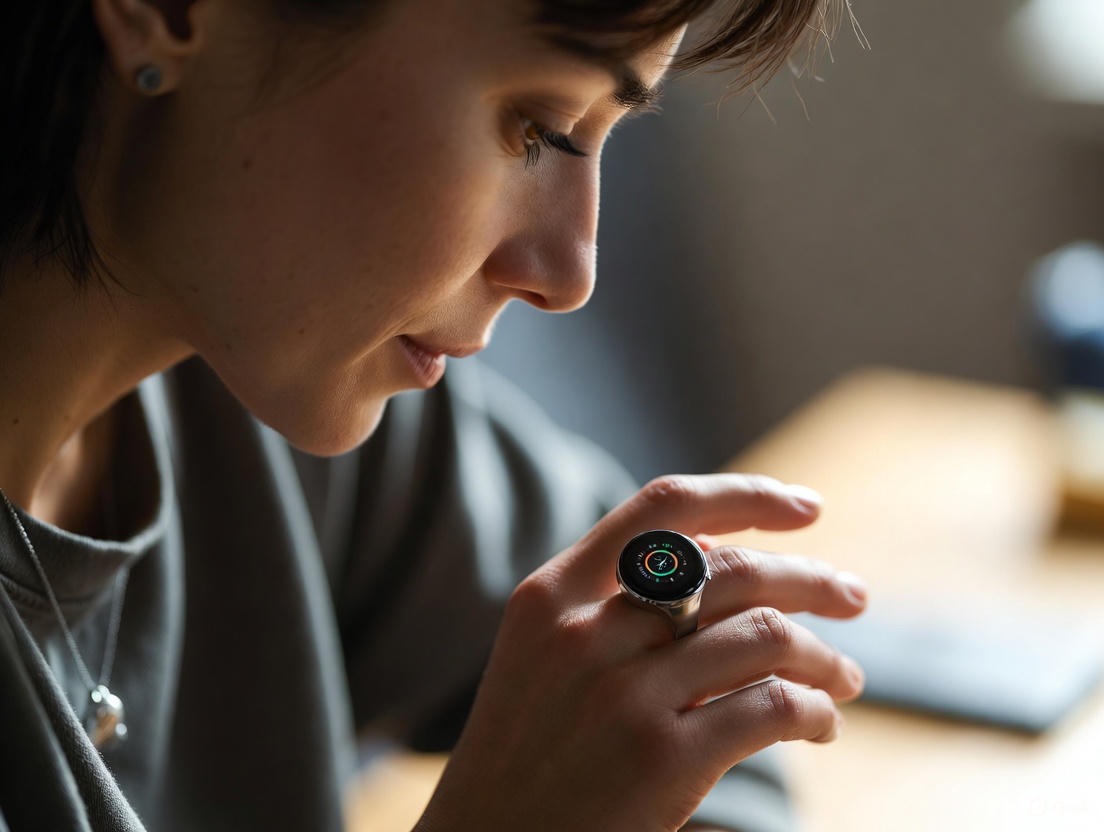
So, your ring indicates you had a terrible night’s sleep with low HRV and high resting heart rate. Before you cancel your plans and declare a recovery day, how can you check its veracity? While you don’t have a polysomnography lab at home, there are practical, accessible ways to validate your ring’s data and build confidence in its readings. This process of cross-referencing transforms you from a passive data consumer into an active, discerning analyst of your own health.
The "How Do I Feel?" Litmus Test: This is your most powerful, immediate, and free validation tool. Your subjective experience is not "anecdotal"; it’s primary data.
Manual Pulse Checks: The Old-School Validator: For heart rate, you have a built-in verification system: your fingers.
Using a Chest Strap for Exercise Benchmarking: For fitness enthusiasts, this is the gold standard for activity validation. Optical heart rate sensors (PPG) in rings and watches can struggle with rapid heart rate changes and motion during high-intensity interval training (HIIT), cycling, or weightlifting.
Temperature Tracking Synergy: For women using temperature for cycle tracking, validation comes from consistency with other signs.
The "Sick Day" Validation: One of the most compelling validations occurs when you fall ill.
The goal of validation isn’t to achieve 100% laboratory-grade agreement. It’s to establish that your ring is a reliable narrator of your body’s story. When its numbers consistently reflect your lived experience and align with other trusted measures, you move from skepticism to a collaborative partnership with your data.
An informed user is a empowered user, and part of that empowerment is understanding the boundaries of the technology. Overestimating a device’s capabilities can lead to anxiety, "cyberchondria," or missed medical care. Let’s delineate the clear limits.
It Is Not a Diagnostic Medical Device: This is the most critical distinction. With rare exceptions for specific, cleared features (like an FDA-cleared ECG app for AFib detection on some devices), your wellness ring is a general wellness product.
It Measures Proxy Signals, Not Direct Outcomes: The ring infers internal states from external signals. It doesn’t measure cortisol; it estimates "stress" from heart rate patterns. It doesn’t measure glycogen stores; it estimates "recovery" from HRV and RHR. These are sophisticated and useful proxies, but they are not the underlying biological substances themselves.
It Lacks Contextual Nuance: The algorithm sees a spike in heart rate and motion at 10 PM. It may log it as "late activity." It cannot know you were having a passionate debate, watching a scary movie, or engaging in intimate activity. The human must provide the context. It sees a high resting heart rate and low HRV. It suggests "poor recovery." It cannot know you just received heartbreaking news or are grieving. The data is objective; the interpretation requires your subjective humanity.
It Can Create Data Anxiety (Orthosomnia): A paradoxical risk of sleep tracking is "orthosomnia" – a preoccupation with achieving perfect sleep data, which in itself causes sleep-disturbing anxiety. If you find yourself losing sleep over your sleep score, it’s time to put the ring in a drawer for a night and reconnect with your natural intuition. The tool should serve you, not the other way around.
It Has Biometric Blind Spots: It cannot measure blood pressure, blood glucose, electrolyte levels, or hydration status—all critical aspects of health. It provides a deep but specific slice of your physiological pie. For a holistic view, it’s important to understand the full landscape of what’s available, which you can explore in our complete wearable health tech guide for 2025.
Respecting these limits is not a criticism of the technology; it’s a mature understanding of its role. Your ring is a brilliant guide and alert system, but it is not a doctor, a therapist, or a oracle. It gives you clues; you, in consultation with healthcare professionals when needed, solve the puzzle.
You can do everything right as a user, but ultimate trust is also earned from the company behind the ring. How transparent are they about the capabilities and limitations of their device? Look for these trust signals:
Published White Papers and Clinical Validations: Reputable companies invest in third-party studies to validate their key metrics. They publish these findings in white papers or peer-reviewed journals.
Clear Specifications and Sensor Information: Does the company’s website clearly list the specific sensors used (e.g., "bioimpedance sensor," "6-LED PPG array") and explain what they measure? Transparency about the hardware is a foundation for trusting the software’s outputs.
Algorithm Explanations (Without Giving Away Secrets): While the exact algorithm is proprietary, companies can explain the principles behind their scores. Do they explain what goes into their "Stress Score" (e.g., "a proprietary blend of HRV, heart rate, and motion data")? Do they define how they determine "Sleep Stages"? Educational content is a sign of a company that wants an informed user base.
Responsive Customer Support and Community: Trust is also built post-purchase. When users have questions about strange data, does the company have a knowledgeable support team or an active community forum where scientists or experts chime in? A company that engages with user questions about data interpretation shows confidence in their product.
Choosing a device from a company that prioritizes this level of transparency and validation is crucial. It shifts the relationship from a black-box mystery to a collaborative, science-based tool. For help evaluating different brands on these criteria, our guide on what to look for before buying wearable health tech is an essential resource.
Trust isn’t just about whether the data is accurate; it’s also about who can see it, how it’s used, and who owns it. When you entrust a device with your most intimate physiological details—your sleep patterns, your stress moments, your potential illness signs—you must also trust the company’s data stewardship. This is a non-negotiable pillar of the modern wellness contract.
Understanding the Data Pipeline: Your data typically flows from the ring to your phone via Bluetooth, from your phone to the company’s cloud servers, and is then processed by algorithms before being sent back to your app. At each point, there are security and privacy considerations.
The Critical Privacy Policy: Before you buy, skim the privacy policy. Look for answers to these questions:
The Value of On-Device Processing: An emerging trend that boosts both privacy and battery life is on-device processing. Instead of sending raw PPG signals to the cloud, the ring’s own chip processes the data into heart rate and HRV on the ring itself, sending only the derived metrics to the cloud. This means less sensitive raw data is transmitted, reducing the privacy surface area.
Your Role in Security: Use a strong, unique password for your account. Enable two-factor authentication if offered. Be cautious about connecting your ring data to numerous third-party apps. Each connection is a potential vulnerability. Review app permissions regularly.
In the end, a device that provides accurate data but has lax security is ultimately untrustworthy. Your wellness journey should not come at the cost of your digital security. Choosing a company that prioritizes this, as discussed in how smart ring benefits protect privacy and data, is a critical part of the trust equation.
The rings of today are impressive, but they are merely the opening chapter. The trajectory of sensor fusion, artificial intelligence (AI), and machine learning (ML) points toward a future where accuracy becomes profoundly personalized and predictive, moving from describing your past to informing your future.
Hyper-Personalized Algorithms: Current algorithms are trained on large, diverse populations. Future algorithms will be continuously trained on you. Imagine a system that learns not just your baseline, but how you specifically respond to different stimuli.
Predictive, Not Just Reactive, Insights: With enough longitudinal data and advanced pattern recognition, AI could move beyond telling you, "You’re stressed," to predicting, "Based on your current data trends and calendar, you are at high risk of burnout in 3-4 weeks if you don’t schedule downtime." It could analyze subtle pre-symptomatic signatures and suggest, "Your metrics suggest your body is fighting something; consider extra rest and hydration."
Multi-Modal Data Fusion: The future of accuracy lies not in a single device, but in a seamless ecosystem. Your ring’s data will be combined with other sources for a complete picture:
Non-Invasive Expansion of Biomarkers: Research is feverishly working on ways to measure new biomarkers from the wrist or finger using optical and spectroscopic techniques. Future rings may be able to estimate:
The Ethical and Regulatory Frontier: As these devices become more capable and their data more predictive, they will inevitably brush against stricter medical device regulations. The line between "wellness" and "healthcare" will blur. This will necessitate even greater transparency, rigorous validation, and clear communication about intended use from manufacturers.
The journey toward perfect accuracy is infinite, but the path is one of increasing refinement and personal relevance. The goal is not a single, mythical "correct" number, but a system that so deeply understands your personal norms that it can guide you toward your optimal state with uncanny precision. This is the promise that makes the current investment in understanding your device so worthwhile.
Understanding accuracy and trust is not an academic exercise—it’s the prerequisite for action. Now, we move from theory to practice, constructing a dynamic, personalized wellness system where your smart ring acts as the foundational sensor, the constant data stream upon which you layer context, behavior, and intention. This system turns passive observation into proactive self-management.
Step 1: Establish Your "Why" – Defining Your Core Objectives
A tool is only as good as the purpose it serves. Before diving into data, clarify your primary goals. These will determine which metrics you prioritize and how you interpret them.
Step 2: Create Your Feedback Loop – The Daily & Weekly Ritual
Consistency in review is key. Sporadic checking leads to reactive decisions. Build simple rituals:
Step 3: Layer in Context – The Human Data Input
Your ring’s data exists in a vacuum without your lived experience. Manually logging context (which many apps allow) enriches the data a thousandfold.
Step 4: Integrate with Complementary Tools (The Ecosystem)
Your ring is your core biometric monitor, but other tools fill in the gaps.
This integrated system—ring data + behavioral context + complementary tools—creates a powerful dashboard for your life. You’re no longer guessing; you’re experimenting, learning, and optimizing based on a feedback loop specific to you.

Your smart ring is a brilliant scout, detecting subtle shifts in your terrain. But there are times when the scout’s report needs to be delivered to the general. Knowing when to bring your data to a healthcare professional is a critical component of responsible use.
Creating a "Data Snapshot" for Your Doctor: Walking into a doctor’s office and saying, "My ring says I'm stressed" is not helpful. Instead, prepare a concise, visual summary.
Red Flags: When to Seek Prompt Medical Attention (Not Just a Doctor's Visit)
Your wellness ring is not a medical alert device. However, understanding its limits means knowing what it cannot handle.
Using Data for Specialized Consultations: Your longitudinal data can be gold for certain specialists.
The bridge between consumer tech and healthcare is being built by informed users who act as custodians of their own data. Your ring gives you the evidence; you become the advocate, using that evidence to have more productive, data-informed conversations about your health.
The most accurate device in the world is useless if it’s sitting in a drawer. Long-term success hinges on integration into your life so seamless that tracking becomes effortless and insight feels automatic. This is where the fundamental design philosophy of the smart ring shines.
The Psychology of Habit Formation: The ring leverages the principle of "frictionless tracking." Unlike a watch you charge nightly or a chest strap you must don for workouts, the ring’s goal is to be "set and forget."
From Obsession to Integration – The Maturity Curve: New users often experience a "honeymoon phase" of obsessive checking. This is normal. The goal is to mature into a phase of periodic, intentional review.
Celebrating the Compound Value: The true power of this technology is not in a single night’s sleep score. It’s in the accrual of small insights over months and years. Seeing a multi-year downward trend in your RHR. Recognizing your personal stress triggers with clarity. Noticing how a new habit, like morning walks, gradually improves your HRV baseline. This is the long-term value that compounds over time. The ring becomes the journal of your body, documenting your wellness journey in objective detail.
We began with a simple question: "Can you trust your wellness ring?" As we’ve journeyed through the intricacies of sensors, algorithms, validation, and interpretation, the answer that emerges is nuanced and empowering.
Trust is not a binary state bestowed by a device; it is a skill built through understanding and collaboration. You can trust your ring not as an infallible oracle, but as a highly sensitive, consistent, and insightful reporter of your physiological trends. You learn its language, appreciate its strengths, acknowledge its limits, and validate its reports against your lived experience.
This process transforms you from a passive patient or consumer into an active CEO of your own health. In this role:
The ultimate promise of the smart ring is not to outsource your health to an algorithm, but to reinforce your own somatic intelligence. It gives you a feedback loop so precise that you can finally see the direct connection between that late-night screen time and your fragmented sleep, between the difficult conversation and your elevated stress physiology, between the consistent training and the beautiful downward drift of your resting heart rate.
This is a profound shift: from guessing to knowing, from generic advice to personalized insight, from reactive healthcare to proactive, daily well-being. It makes health tangible, manageable, and personal. In a world flooded with wellness noise, your ring can help you tune into the most important signal of all: the subtle, complex, and wise language of your own body.
So, slip on your ring. Not as a taskmaster, but as a partner. Observe, learn, experiment, and grow. Let it be the quiet guide on your journey to a more aware, resilient, and vibrant you. The data is yours, the body is yours, and now, the understanding to bring them together is yours as well. Welcome to a new era of empowered self-knowledge.
Having established a foundation of trust, we now turn to the most nuanced and powerful metric in your wellness arsenal: Heart Rate Variability. If resting heart rate is the volume of your engine, HRV is the fine-tuning of its timing. It is the ultimate biomarker of your nervous system's flexibility and your body's readiness to perform, recover, and adapt. For the informed user, moving from simply observing an HRV number to understanding its dynamics is where true wellness mastery begins.
Beyond the Single Number: Understanding Time and Frequency Domains
Your ring provides a single, usually nightly average, HRV number (often in milliseconds, like RMSSD or SDNN). This is a superb summary metric. But to appreciate its depth, know that it’s derived from a complex analysis of the heartbeat interval series.
The key takeaway is that HRV is not random noise; it’s a rich signal of autonomic nervous system communication. The goal of practices like meditation, paced breathing, and proper sleep is to increase the amplitude and harmony of this signal, which is the foundation of improving HRV over time.
The Art of Interpreting Your HRV Curve: Context is Everything
An isolated HRV number is meaningless. Its power is in the trend and its reaction to life.
Factors That Influence HRV – Building Your Personal Model
To trust HRV, you must learn its drivers for you. The major levers include:
By logging these factors, you move from seeing HRV as a mysterious score to understanding it as a direct report on your lifestyle choices. This is the essence of making health data actionable.
Sleep is not a binary state. It’s a dynamic, architecturally complex process essential for memory consolidation, hormonal regulation, metabolic cleanup, and nervous system repair. Your ring’s sleep staging, while an estimate, provides a map of this nightly journey. Learning to read this map is more valuable than fixating on the final "Sleep Score."
Understanding the Stages and Their Signature Patterns:
Actionable Insights from Your Sleep Map:
Your ring allows you to become a sleep scientist in your own lab. By making one small change at a time (e.g., installing blackout curtains, stopping caffeine after 2 PM, trying a cooling mattress pad) and observing the impact on your sleep architecture over a week, you conduct personalized, data-driven experiments. This empirical approach is what leads to creating better health habits for the long term.
While HR and HRV get most of the attention, the skin temperature sensor is a silent workhorse of insight. It doesn’t shout with daily variability but whispers long-term, systemic truths. Tracking its subtle patterns unlocks understanding of your circadian rhythm, metabolic health, and immune function.
Circadian Rhythm: Your Body's Internal Compass
Your core body temperature follows a near-24-hour rhythm, controlled by your suprachiasmatic nucleus (SCN) in the brain. Skin temperature inversely mirrors this: it’s cooler during the day and warms at night as blood vessels dilate to dissipate core heat, facilitating sleep onset.
The Early-Warning System for Illness
One of the most validated and valuable uses of continuous temperature tracking is illness prediction. Unlike a fever thermometer that catches a full-blown illness, your ring detects the fever response—a sustained elevation above your personal baseline.
A Window into Hormonal and Metabolic Health
Temperature teaches patience. Its value isn’t in daily fluctuations but in the slow, consistent story it tells about your body’s most fundamental rhythms. It is the metric that most clearly embodies the principle of knowing your unique biology](https://oxyzen.ai/blog/smart-ring-benefits-personalize-unique-biology).
With a deep understanding of the metrics, the practical question arises: which ring is best for accuracy and insight? The market has moved beyond a single player. Here, we compare the leading contenders (Oura Ring Gen 3, Ultrahuman Ring Air, Circular Ring Slim, etc.) not on style or battery alone, but on their philosophical and technical approach to data accuracy and user guidance.
Comparison Framework: The Pillars of a Trustworthy Device
When evaluating, consider these pillars:
Deep Dive on Key Players:
(Note: This is a dynamic snapshot. Technology evolves rapidly.)
The Verdict: "Best" is Defined by Your "Why"
Ultimately, the most accurate ring for you is the one whose philosophy aligns with your goals, whose form factor you’ll wear consistently, and whose app you’ll engage with thoughtfully. This choice is the first step in maximizing your wellness ring investment. For a broader view of this landscape, consult our guide to rings, watches, and beyond.
Your ring’s true power emerges when its general insights are applied to specific health contexts or goals. It becomes not just a tracker, but a management tool for navigating particular challenges.
For Stress and Anxiety Management:
The ring provides an objective feedback loop for the often-subjective experience of anxiety.
For Athletes Navigating Overtraining:
Overtraining syndrome (OTS) is an imbalance between training stress and recovery. The ring is an ideal early-warning system.
For Women Navigating Perimenopause and Menopause:
Hormonal fluctuations can disrupt sleep, thermoregulation, and heart rate patterns. The ring helps objectify the experience.
For Individuals with Post-Viral or Chronic Fatigue Considerations:
Conditions like Long COVID are characterized by post-exertional malaise (PEM), where an activity leads to a severe energy crash days later.
In each case, the ring shifts the paradigm from symptomatic management to systemic understanding. It provides the external data to navigate internal, often confusing, bodily states. This is the epitome of empowering health data ownership.
Your Trusted Sleep Advocate: Sleep Foundation — https://www.sleepfoundation.org
Discover a digital archive of scholarly articles: NIH — https://www.ncbi.nlm.nih.gov/
39 million citations for biomedical literature :PubMed — https://pubmed.ncbi.nlm.nih.gov/
Experts at Harvard Health Publishing covering a variety of health topics — https://www.health.harvard.edu/blog/
Every life deserves world class care :Cleveland Clinic - https://my.clevelandclinic.org/health
Wearable technology and the future of predictive health monitoring :MIT Technology Review — https://www.technologyreview.com/
Dedicated to the well-being of all people and guided by science :World Health Organization — https://www.who.int/news-room/
Psychological science and knowledge to benefit society and improve lives. :APA — https://www.apa.org/monitor/
Cutting-edge insights on human longevity and peak performance:
Lifespan Research — https://www.lifespan.io/
Global authority on exercise physiology, sports performance, and human recovery:
American College of Sports Medicine — https://www.acsm.org/
Neuroscience-driven guidance for better focus, sleep, and mental clarity:
Stanford Human Performance Lab — https://humanperformance.stanford.edu/
Evidence-based psychology and mind–body wellness resources:
Mayo Clinic — https://www.mayoclinic.org/healthy-lifestyle/
Data-backed research on emotional wellbeing, stress biology, and resilience:
American Institute of Stress — https://www.stress.org/


